



If you’re in your 40s and suddenly notice small leaks when you laugh, cough, exercise, or rush to the bathroom, you’re not imagining it. And you’re definitely not alone.
One of the most surprising (and rarely talked about) changes during perimenopause is bladder leakage. Many women experience it quietly, assuming it’s just “part of aging” or something they should deal with privately.
The truth?
Bladder leakage is very common during perimenopause, and it’s also very addressable.
Let’s talk about why it happens, what’s really going on in your body, and what you can do to support bladder control naturally during this transition.
Is bladder leakage common in perimenopause?
Yes, bladder leakage is extremely common during perimenopause.
Research shows that up to 30–50% of women in midlife experience some form of urinary leakage, including stress incontinence (leaking with coughing, sneezing, or movement) or urgency (sudden, intense need to urinate). Many women first notice these changes before their periods become irregular, often in their early-to-mid 40s.
According to findings published in journals associated with The International Continence Society and summaries shared by The Menopause Society, hormonal shifts during perimenopause directly affect the bladder, urethra, and pelvic support system.
In other words: this isn’t random, and it isn’t “just you.”
Why perimenopause affects bladder control
Perimenopause is a time of hormonal fluctuation, not just decline. Estrogen levels rise and fall unpredictably, and this has real effects on the tissues involved in bladder control.
Here’s what’s happening behind the scenes:
1. Changes in estrogen affect bladder tissue
Estrogen plays a role in keeping the bladder lining and urethra healthy, elastic, and responsive. When levels fluctuate, these tissues can become more sensitive or less supportive, leading to leaks or urgency.
2. The pelvic floor may lose coordination (not just strength)
Bladder leakage isn’t always about “weak muscles.” Often, the pelvic floor muscles aren’t timing or responding as efficiently as they once did. This is why doing endless Kegels doesn’t always fix the problem and sometimes makes it worse.
3. Increased inflammation and pressure
Hormonal shifts can contribute to low-grade inflammation in the pelvic region, which may irritate the bladder and increase frequency or urgency.
This combination is why bladder leakage often appears during perimenopause, not just after menopause.
A common myth: “This is just part of getting older”
Let me be very clear here.
Bladder leakage is common, but it is not something you have to accept.
Using pads, planning your day around bathrooms, or avoiding movement because of leaks may feel like the only option, but they’re not solutions. They’re workarounds.
Your body is communicating with you. And when you support it properly, it can respond.
Natural support for bladder leakage during perimenopause
The most effective approach to bladder control during perimenopause is multifaceted support - not hormones, not quick fixes, and not shame-based solutions.
That means:
-
Supporting pelvic floor function
-
Calming inflammation
-
Nourishing bladder and connective tissue
-
Creating simple, sustainable daily habits
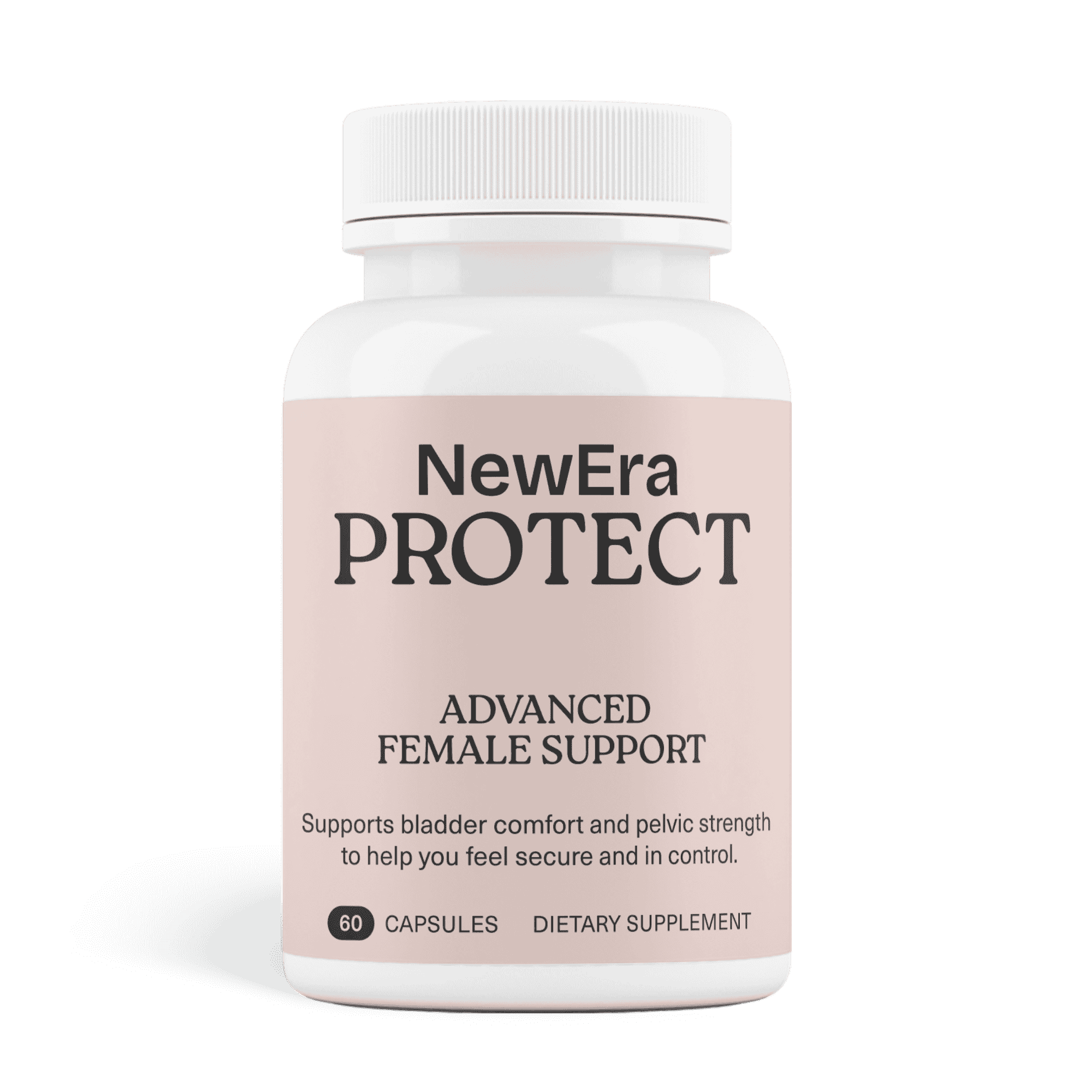
This is exactly why I helped develop NewEra Protect.
How NewEra Protect supports bladder health naturally
NewEra Protect is a non-hormonal, all-natural supplement designed specifically to support bladder control and pelvic health, especially for women in perimenopause and beyond.
It works in a very simple way:
You take it daily, and it supports your body from the inside out - no complicated routines, no stimulants, no hormones.
Women often love that it takes just seconds a day to support something that’s been quietly affecting their confidence for years.
NewEra Protect was formulated with ingredients traditionally studied and used to support:
-
Bladder tissue integrity
-
Pelvic support structures
-
Inflammatory balance
-
Healthy urinary function
It’s not about forcing your body to do something unnatural. It’s about giving it the support it needs during a very real transition.
You’re not broken. You’re in transition.
Perimenopause can feel confusing. Symptoms show up without warning, and no one really prepares us for the changes that happen before menopause.
Bladder leakage is one of the most common and most misunderstood signals during this phase.
But here’s the empowering part:
When you understand what’s happening, you can take supportive, informed steps forward.
You deserve to feel confident in your body.
You deserve solutions that respect your physiology.
And you deserve to know you’re not alone in this.
FAQ: Perimenopause & Bladder Leakage
Is bladder leakage a sign of menopause?
It can be a sign of perimenopause (the transition before menopause) because hormones fluctuate and can affect bladder and pelvic tissues. It doesn’t automatically mean something is “wrong,” but it is worth addressing early.
Can perimenopause cause frequent urination?
Yes. Many women notice increased urgency or frequency during perimenopause. Hormonal changes can make the bladder more sensitive and reactive.
What’s the difference between stress incontinence and urgency incontinence?
Stress incontinence is leaking with pressure (laughing, coughing, jumping). Urgency incontinence is leaking with a sudden, strong need to urinate that feels hard to delay. Some women experience both.
Do Kegels help with perimenopause bladder leaks?
Sometimes but not always. Bladder control often depends on pelvic floor coordination and relaxation as much as strength. If symptoms worsen with Kegels, a more balanced approach may help.
What natural options support bladder control during perimenopause?
Many women start with pelvic floor-friendly movement (check out my Pelvic Floor Strong program), hydration habits, reducing bladder irritants, and targeted non-hormonal support (NewEra Protect) that helps bladder tissue and inflammatory balance.
When should I talk to a doctor?
If leakage is sudden, painful, includes burning, blood, fever, or drastically changes your day-to-day life, it’s smart to rule out infection or other issues.
Before letting you go, I do want to mention that this article is meant for educational purposes only and reflects my experience working in the pelvic health space. I am not a medical doctor, and this content is not a substitute for professional medical advice, diagnosis, or treatment. Please consult your healthcare provider before starting any new supplement or wellness routine.
With love,
Alex Miller

Alex Miller is the founder of NewEra Naturals and the creator of Pelvic Floor Strong. She has spent over a decade helping women understand and support their pelvic health naturally. Alex lives in Canada with her daughter, Linen, and is passionate about empowering women through education, movement, and simple daily support.
Leave a comment
All comments are moderated before being published.
This site is protected by hCaptcha and the hCaptcha Privacy Policy and Terms of Service apply.