





If you’ve been dealing with bladder urgency, leaks, or frequent nighttime trips to the bathroom, you may have come across magnesium as a possible natural remedy.
It’s a fair question.
Can magnesium actually help bladder symptoms?
The honest answer is: it can help in certain situations — but it’s rarely the full solution.
Let’s break down why.
Why Magnesium Is Often Recommended
Magnesium plays an important role in the body. It helps regulate:
• Muscle contraction and relaxation
• Nerve signaling
• Stress response
• Sleep quality
Because the bladder is a muscle and is closely connected to the nervous system, magnesium is sometimes suggested for urgency or overactive bladder symptoms.
In theory, magnesium may help relax overactive muscles and calm a heightened nervous system.
For women whose symptoms are strongly tied to stress or muscle tension, that can make a difference.
When Magnesium Might Help
Magnesium may be supportive if:
• Your urgency worsens during stressful periods
• You tend to carry tension in your pelvic floor
• You struggle with sleep or nervous system overactivation
• You notice muscle tightness throughout your body
In these cases, magnesium’s calming effect on muscles and nerves may reduce some bladder reactivity.
Some small studies have suggested magnesium may improve symptoms of overactive bladder in certain individuals. But the results are mixed and not universal.
It’s supportive — not corrective.
What Magnesium Does Not Address
Here’s where we need to zoom out.
Bladder symptoms in midlife are rarely caused by one issue alone. They often involve:
• Connective tissue changes
• Hormonal shifts
• Pelvic floor coordination problems
• Tissue thinning
• Inflammatory changes
Magnesium does not rebuild connective tissue.
It does not strengthen pelvic support structures.
It does not directly address estrogen-related tissue changes.
So while it may calm one piece of the system, it does not target the structural support the bladder relies on.
Why Midlife Bladder Symptoms Are More Complex
During perimenopause and menopause, estrogen levels fluctuate and decline. This affects:
• The lining of the urethra
• Collagen and connective tissue strength
• Pelvic floor responsiveness
• Bladder sensitivity
At the same time, stress levels often increase during this stage of life.
This is why urgency and leakage often show up together — and why addressing only muscle relaxation may not be enough.
A More Targeted Approach to Bladder Support
If magnesium supports relaxation, what supports bladder tissue itself?
That’s where a more targeted formula matters.
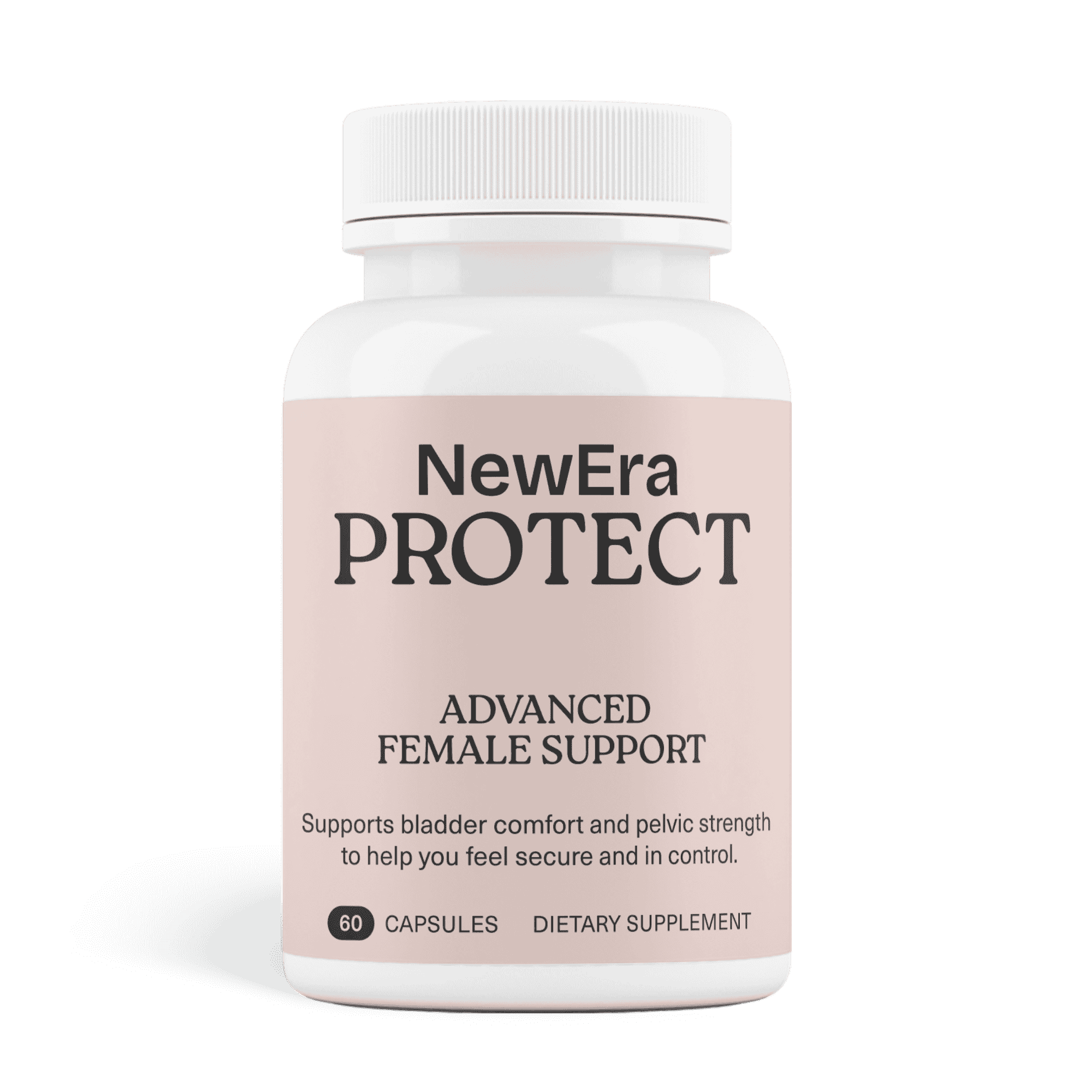
NewEra Protect was formulated specifically to support bladder tissue integrity and pelvic support during midlife and beyond.
Instead of focusing only on muscle relaxation, it supports:
• Connective tissue strength
• Antioxidant protection
• Urinary tract comfort
• Pelvic structural support
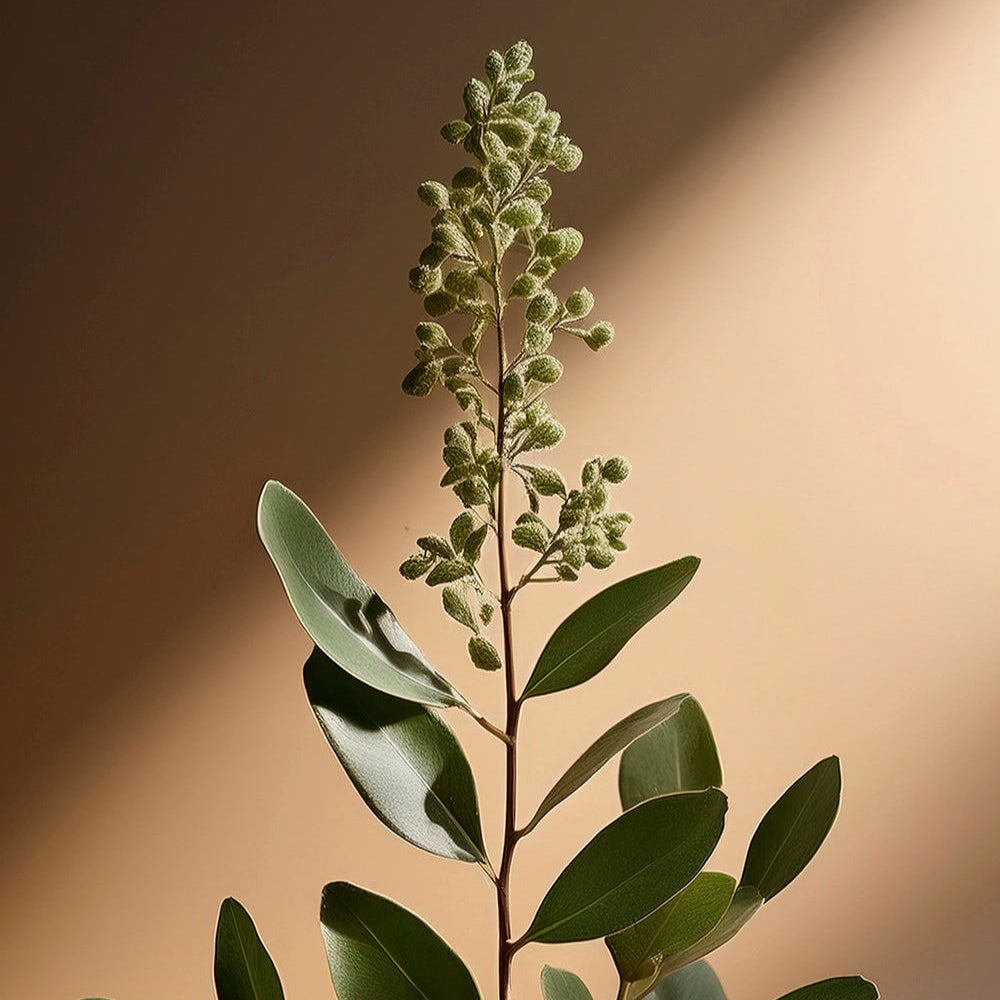
Ingredients like Crataeva Nurvala, Japanese Knotweed (a source of resveratrol), and Horsetail work together to support the structural and connective aspects of bladder health — areas magnesium does not directly address.
For many women, this deeper tissue support is what creates meaningful improvement.
Can You Take Magnesium and Bladder Support Together?
In many cases, yes.
Magnesium may help calm tension and support sleep, while targeted bladder support addresses tissue and structural integrity.
As always, check with a healthcare provider before combining supplements, especially if you take medications or have underlying conditions.
The Bottom Line
Can magnesium help bladder symptoms?
For some women, yes — particularly when stress and muscle tension are major contributors.
But magnesium alone is unlikely to resolve bladder leakage or urgency if connective tissue support and hormonal shifts are involved.
Bladder symptoms during midlife are multi-layered.
Supporting relaxation, tissue health, pelvic coordination, and hormonal balance together is often what makes the biggest difference.
You don’t need a quick fix.
You need the right kind of support for the stage of life you’re in.
Frequently Asked Questions
Is magnesium good for overactive bladder?
It may help some individuals by relaxing muscles and calming the nervous system, but results vary.
Can magnesium stop bladder leaks?
Magnesium is unlikely to stop leaks caused by connective tissue weakness or pelvic support changes.
How long does magnesium take to work?
If helpful, some women notice subtle changes within a few weeks, particularly in stress-related symptoms.
What works best for bladder symptoms after 40?
A combination of pelvic floor coordination, stress support, and targeted bladder tissue support tends to be most effective.
Before letting you go, I do want to mention that this article is meant for educational purposes only and reflects my experience working in the pelvic health space. I am not a medical doctor, and this content is not a substitute for professional medical advice, diagnosis, or treatment. Please consult your healthcare provider before starting any new supplement or wellness routine.
With love,
Alex Miller

Alex Miller is the founder of NewEra Naturals and the creator of Pelvic Floor Strong. She has spent over a decade helping women understand and support their pelvic health naturally. Alex lives in Canada with her daughter, Linen, and is passionate about empowering women through education, movement, and simple daily support.
Read more
Can supplements help bladder leakage? Learn how targeted nutrients support bladder tissue, pelvic health, and midlife urinary control naturally.
Pelvic floor exercises vs Kegels: what’s the difference? Learn why Kegels alone may not fix bladder leaks and how a full-body pelvic floor approach can help women over 40 regain control naturally.
Leave a comment
All comments are moderated before being published.
This site is protected by hCaptcha and the hCaptcha Privacy Policy and Terms of Service apply.