




If you’ve ever been told to “just do your Kegels,” you’re not alone.
For decades, Kegels have been the go-to advice for bladder leaks, urgency, and pelvic floor weakness. But here’s the honest truth:
Kegels and pelvic floor exercises are not the same thing.
And for many women over 40, that distinction matters more than ever.
Let’s break it down clearly so you can understand what your body actually needs.
What Are Kegels?
Kegels are a very specific type of exercise.
They involve consciously squeezing and lifting the pelvic floor muscles, holding that contraction, and then releasing.
Dr. Arnold Kegel introduced them in the 1940s to help women improve bladder control after childbirth. The idea is simple: strengthen the muscles that support the bladder, uterus, and rectum.
And yes, for some women, they can help.
But here’s where it gets complicated.
Many women:
-
Don’t know if they’re doing them correctly
-
Over-squeeze without fully relaxing
-
Already have tight pelvic floor muscles
-
Have coordination issues, not strength issues
If you’re clenching all day from stress, posture, or chronic tension, adding more squeezing can actually make symptoms worse.
What Are Pelvic Floor Exercises?
Pelvic floor exercises are broader and more functional.
They include:
-
Breath coordination
-
Core stability
-
Glute activation
-
Hip mobility
-
Postural alignment
-
Relaxation and lengthening work
Instead of isolating the pelvic floor with repeated squeezes, these exercises retrain the entire system.
Because your pelvic floor does not work alone.
It works with your diaphragm when you breathe.
It works with your deep core when you lift.
It responds to your hips, spine, and even how you sit.
This is especially important after 40, when hormonal changes can affect tissue elasticity, muscle tone, and recovery.
Why Kegels Aren’t Always Enough
If you leak when you sneeze, laugh, jump, or run, it’s easy to assume you’re “weak.”
But leakage is often a coordination issue.
Your pelvic floor needs to:
-
React quickly
-
Contract at the right moment
-
Relax fully afterward
If any part of that timing is off, symptoms can show up.
Doing 100 squeezes a day does not teach timing.
It does not teach integration.
And it definitely does not address tension patterns.
That’s why so many women say:
“I’ve been doing Kegels for years and nothing changed.”
So What Actually Works?
A coordinated, full-body approach.
That’s exactly why Pelvic Floor Strong was created.
Instead of isolated squeezing, the program focuses on:
-
Functional pelvic floor training
-
Breath-driven core activation
-
Safe strengthening that respects midlife bodies
-
Short, realistic sessions you can actually stick with
It’s designed for women 40, 50, 60 and beyond who want real support without aggressive workouts or endless Kegels.
And because pelvic floor health is not just muscular, many women also choose to support tissue integrity and bladder comfort from the inside.
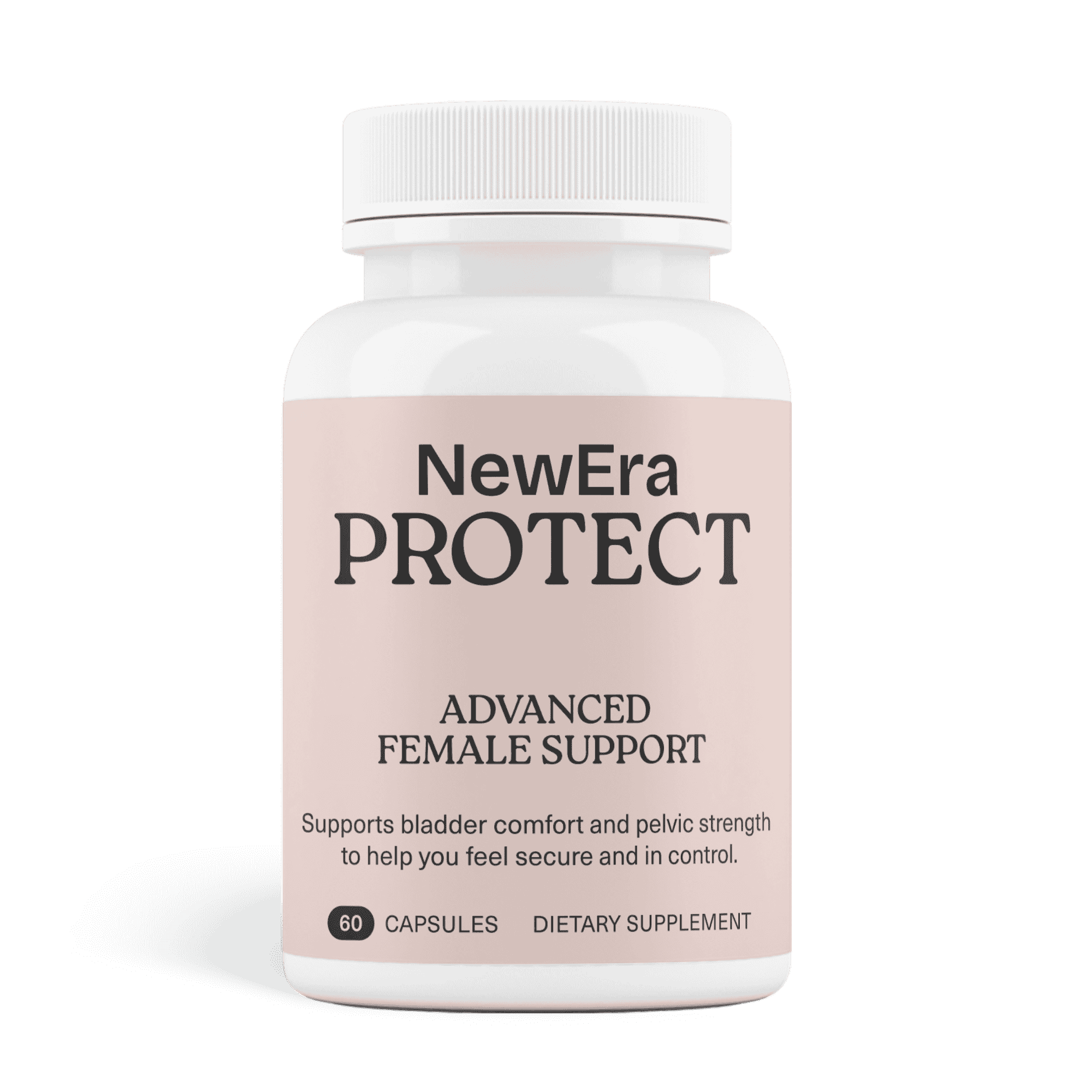
That’s where NewEra Protect comes in.
NewEra Protect is formulated to support bladder tissue health, healthy urinary function, and connective tissue resilience. When combined with the right exercises, it can create a powerful inside-out approach.
Movement plus nutritional support often works better than either one alone.
Do You Need to Stop Doing Kegels?
Not necessarily.
But you may need to stop doing only Kegels.
If you:
-
Feel tight or tense in your pelvic area
-
Experience urgency without stress leaks
-
Have lower back or hip tension
-
Haven’t seen results despite years of squeezing
It may be time to shift your strategy.
Strength is not just about tightening.
It’s about control, coordination, and balance.
The Bottom Line
Kegels are one tool.
Pelvic floor exercises are a system.
If you’ve been stuck in the squeeze-and-hope cycle, it’s not because your body is broken. It’s because you were given incomplete advice.
You deserve a smarter approach.
And the good news is this: your pelvic floor can adapt at any age.
With the right strategy, real change is absolutely possible.
Before letting you go, I do want to mention that this article is meant for educational purposes only and reflects my experience working in the pelvic health space. I am not a medical doctor, and this content is not a substitute for professional medical advice, diagnosis, or treatment. Please consult your healthcare provider before starting any new supplement or wellness routine.
With love,
Alex Miller

Alex Miller is the founder of NewEra Naturals and the creator of Pelvic Floor Strong. She has spent over a decade helping women understand and support their pelvic health naturally. Alex lives in Canada with her daughter, Linen, and is passionate about empowering women through education, movement, and simple daily support.
Read more
Magnesium is often recommended for bladder symptoms—but does it really work? Here’s what helps most for urgency and leaks after 40.
Learn how menopause affects bladder control, including urgency and leaks. Discover why hormone changes impact the bladder and how to support midlife bladder health.
Leave a comment
All comments are moderated before being published.
This site is protected by hCaptcha and the hCaptcha Privacy Policy and Terms of Service apply.