





If you have ever noticed bladder leaks or sudden urgency showing up during a stressful period of life, you are not imagining things.
Many women experience changes in bladder control during times of emotional strain, mental overload, or chronic stress. And while stress is rarely the only cause, it can play a much bigger role than most people realize.
Understanding how stress affects the bladder can be the first step toward feeling more in control again.
Yes, Stress Can Contribute to Bladder Leaks
Stress affects far more than your mood. It changes how your nervous system, muscles, and hormones communicate with each other.
When stress becomes chronic, the body stays in a heightened state of alert. This can lead to:
• Increased muscle tension
• Elevated cortisol levels
• Shallow or restricted breathing
• Disrupted communication between the brain and bladder
The bladder is highly sensitive to nervous system signals. When those signals are constantly activated by stress, the bladder may begin sending urgency messages even when it is not full. This can result in leaks, frequent bathroom trips, or the feeling that you need to go immediately.
This is not a personal failure. It is a biological response.
The Stress and Pelvic Floor Connection
One of the most overlooked ways stress affects bladder control is through muscle tension, particularly in the pelvic floor.
Under stress, many women unconsciously tighten their abdomen, glutes, jaw, and pelvic floor. Over time, this constant gripping can reduce the pelvic floor’s ability to relax and respond properly.
A pelvic floor that cannot fully relax often struggles to contract effectively when needed. This loss of coordination can contribute to leaks during sneezing, coughing, laughing, lifting, or quick movements.
More tension does not equal more strength. In fact, it often leads to the opposite.
Stress and Urinary Urgency
Stress activates the body’s fight-or-flight response. In this state, the body prioritizes survival over comfort or timing.
This can make the bladder more reactive, leading to:
• Sudden urgency
• Needing to urinate more frequently
• Anxiety around bathroom access
• Leaks that feel unpredictable
Many women notice these symptoms worsen during emotionally demanding seasons of life, even if their habits or routines have not changed.
Why Midlife Stress Can Feel Different
The stresses of daily life can feel more intense during midlife as hormones shift and responsibilities increase. Careers, caregiving, family needs, and physical changes often overlap during this stage of life.
Supporting a healthy stress response becomes increasingly important, not just for emotional wellbeing, but for physical comfort as well.
Hormonal changes during perimenopause and menopause can make the bladder and surrounding tissues more sensitive. When chronic stress is layered on top of these shifts, symptoms like urgency and leaks may become more noticeable.
This is why bladder changes often appear or intensify during midlife.
Supporting Your Stress Response During Midlife
Stress does not live only in the mind. It lives in the body.
When the nervous system is under constant pressure, the bladder and pelvic floor often reflect that strain. Supporting the body gently and consistently can make a meaningful difference.
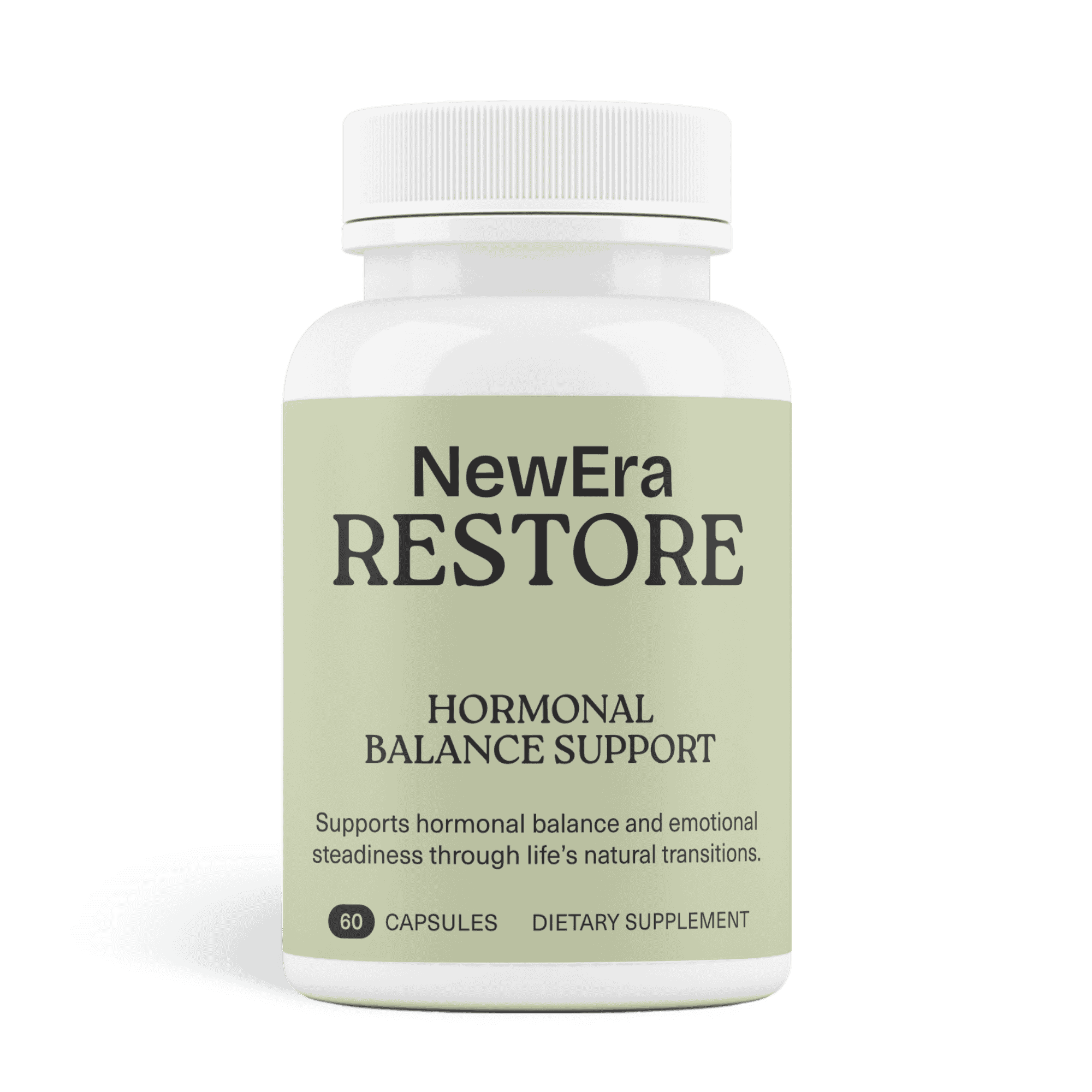
NewEra Restore was created to support emotional wellness and balance during periods of change. By nourishing the body from within, it helps support hormone balance and nervous system health, which can be especially helpful when stress begins to show up physically.
NewEra Calm was specifically formulated to support stress, mood, and nervous system regulation. When the nervous system feels more supported, many women notice improvements in overall tension patterns throughout the body, including the pelvic floor.
Supporting your stress response is not about numbing emotions or forcing relaxation. It is about giving the body what it needs to feel steadier and more resilient.
Movement That Works With Stress, Not Against It
When stress is contributing to bladder leaks, aggressive exercise and excessive Kegels are often not the answer.
What helps most is movement that restores coordination between the nervous system and the pelvic floor.
Gentle, functional programs like Pelvic Floor Strong focus on whole-body support rather than isolated muscle tightening. By improving posture, breathing, and pelvic floor responsiveness, this type of movement helps the body relearn balance rather than forcing control.
When the body feels supported, symptoms often begin to soften.
You Are Not Broken. Your Body Is Communicating.
If stress has been part of your story and bladder leaks have followed, there is nothing wrong with you.
Your body has been adapting to pressure, change, and demand. Bladder symptoms are often signals, not flaws.
When stress is addressed holistically through nervous system support, gentle movement, and internal nourishment, bladder comfort can improve.
You do not need to push harder.
You need the right kind of support.
Frequently Asked Questions
Can stress really cause bladder leaks?
Yes. Stress can disrupt nervous system signaling and pelvic floor coordination, which may contribute to leaks or urgency.
Can anxiety make bladder urgency worse?
It can. Anxiety activates the fight-or-flight response, which often increases bladder sensitivity and urgency.
Do stress-related bladder leaks improve?
Often, yes. When stress levels are supported and the nervous system calms, many women notice fewer symptoms.
Should I avoid exercise if stress is causing leaks?
Not necessarily. Supportive, low-impact movement is often more beneficial than high-intensity workouts during stressful periods.
Before letting you go, I do want to mention that this article is meant for educational purposes only and reflects my experience working in the pelvic health space. I am not a medical doctor, and this content is not a substitute for professional medical advice, diagnosis, or treatment. Please consult your healthcare provider before starting any new supplement or wellness routine.
With love,
Alex Miller

Alex Miller is the founder of NewEra Naturals and the creator of Pelvic Floor Strong. She has spent over a decade helping women understand and support their pelvic health naturally. Alex lives in Canada with her daughter, Linen, and is passionate about empowering women through education, movement, and simple daily support.
Read more
Looking for quick fixes for pee leaks? Learn what actually works to reduce bladder leaks naturally and support pelvic floor and nervous system health after 40.
Wondering how long it takes to improve bladder control naturally? Learn realistic timelines, what affects progress, and how to support lasting results.
Leave a comment
All comments are moderated before being published.
This site is protected by hCaptcha and the hCaptcha Privacy Policy and Terms of Service apply.