




"I never had this problem before. Now I'm leaking when I laugh, sneeze — even when I stand up. What is happening?"
If that sounds familiar, you're not alone — and you're not imagining it. Bladder leaks in women over 40 are one of the most common and least-talked-about changes in midlife. Most women assume it's just a normal part of getting older that they have to silently manage.
But here's what's actually true: bladder leaks are not random, and they are not something you simply have to accept. They happen for specific, well-understood biological reasons — and when you understand those reasons, you can do something about them.
What's Actually Causing Bladder Leaks After 40
Bladder leaks rarely come from just one cause. They happen when several systems in the body shift at the same time — often quietly, over years — until the body simply needs more support than it's currently getting. Here are the five main drivers.
1. Estrogen decline: the hidden architect of bladder health
Most women don't realize how central estrogen is to bladder control. Estrogen receptors line the walls of the bladder, the urethra, and the pelvic floor muscles. When estrogen declines during perimenopause — which can begin as early as the late 30s — urogenital tissues become thinner, stiffer, and less elastic. The bladder lining, which normally expands comfortably as it fills, becomes irritated and reactive — contracting before it's full and sending urgent signals to urinate. The urethra, less supported, struggles to maintain its seal under pressure.
2. Pelvic floor dysfunction — it's not just about strength
The pelvic floor is the hammock of muscles and connective tissue that supports your bladder, bowel, and uterus. Over time — through pregnancy, childbirth, years of physical patterns, prolonged sitting, and hormonal changes — these muscles can become weakened, overly tight, or uncoordinated. And here's what most women miss: tightness is just as problematic as weakness. A pelvic floor that isn't working in sync with your breath and core cannot properly respond to sudden pressure changes. That's when leaks happen during ordinary movement.
3. Collagen loss and structural support decline
After 40, collagen production slows throughout the body — affecting skin, joints, tendons, and critically, the connective tissues that hold the bladder in its correct position. With less structural support, the bladder becomes more vulnerable to shifts in pressure from movement, exercise, and even daily activities like lifting groceries or climbing stairs. A peer-reviewed systematic review in PMC confirmed that estrogen's role in stimulating collagen turnover means its decline directly reduces the structural integrity of the entire urogenital system.
4. The nervous system connection most women never hear about
Your bladder is directly wired to your nervous system — and a nervous system running in a chronic stress state sends constant low-level signals to the bladder that read as urgency. Research shows that psychological stress and heightened cortisol levels increase bladder reactivity, shortening the window between the first urge to go and actual leakage. This is why many women notice their urgency is worse during stressful periods, and why nervous system support is a legitimate and underused part of addressing bladder control.
5. Cumulative lifestyle patterns
High-impact exercise without proper pelvic floor engagement, chronic constipation and straining, poor posture, and ignoring early symptoms can all quietly compound over years. Individually, none of these seems significant. Together, they build the conditions for dysfunction to emerge — often appearing suddenly in the 40s even though the contributing factors have been accumulating for a decade or more.
What Actually Helps Women Over 40 Regain Bladder Control
These strategies are not guesswork. Each one addresses a specific, documented mechanism driving bladder leaks in midlife women.
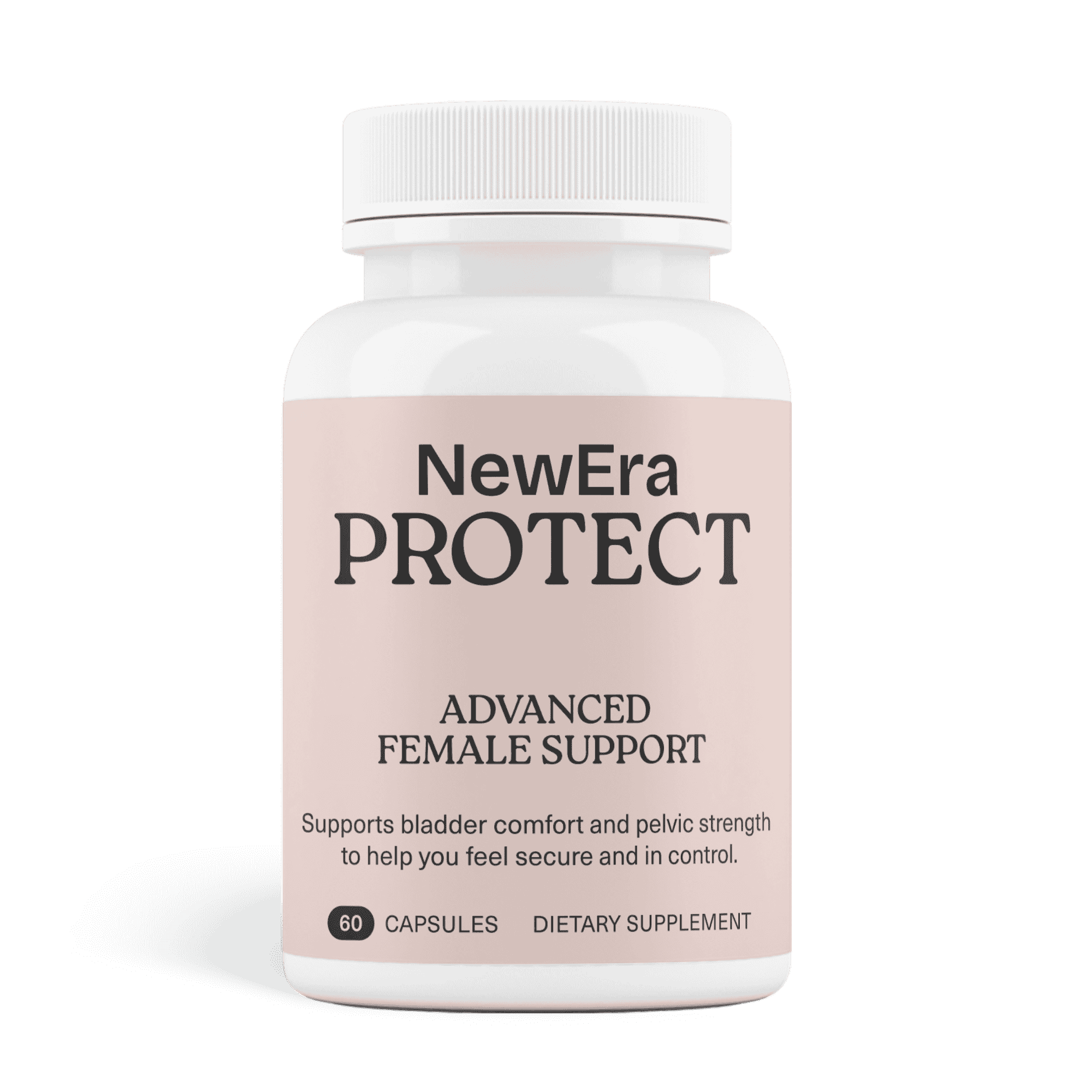
Because estrogen loss directly affects the structural integrity of bladder and urethral tissue, supporting the body's internal environment matters. From a nutritional standpoint, anti-inflammatory foods — omega-3-rich fish, leafy greens, berries, and collagen-supporting vitamin C — help maintain tissue resilience. Staying well hydrated is equally important: concentrated urine is more irritating to a sensitive bladder than diluted urine, counterintuitive as it sounds. Certain botanical ingredients have also been studied for their role in urinary tract and bladder tissue support, including crataeva (traditionally used to support urinary muscle tone), horsetail (a source of silica and antioxidants), and boswellia (studied for its role in healthy inflammatory balance) — all found in NewEra Protect.
3. Regulate Your Nervous System Daily
A reactive bladder is often a stressed bladder. Because the urge to urinate is controlled partly by autonomic nervous system signals, a nervous system in a chronic state of high alert sends more frequent and more urgent bladder signals. Simple daily practices that downregulate the nervous system — slow diaphragmatic breathing, gentle walks, moments of deliberate stillness, consistent sleep — can meaningfully reduce bladder reactivity over time. This is not a secondary concern. For many women, nervous system support is the missing piece that makes everything else work better. Think of it as turning down the volume on false urgency signals.
4. Start Now — Even If It's Been Years
One of the most damaging myths about bladder leaks is that if you've had them for a while, it's too late to make meaningful changes. The research says otherwise. Pelvic floor tissue responds to retraining. Bladder reactivity responds to nervous system support. Urogenital tissue health responds to nutrition and targeted support. Whether your leaks started last month or have been present for years, beginning a consistent, multi-pronged approach creates measurable change. The women who see the least improvement are those who wait — not those who start late. Early intervention is ideal, but late intervention still works.
This Isn't Random. And You're Not Stuck.
Bladder leaks after 40 happen because of real, documented biological shifts — declining estrogen, changing pelvic floor coordination, reduced collagen support, and nervous system reactivity. None of these are character flaws. None of them are permanent sentences.
What the research makes clear is that the body remains remarkably responsive when given the right support. Pelvic floor programs, tissue nourishment, nervous system care, and consistent daily habits create real, measurable change — at any age, and at any point in the journey.
Ready to Support Your Body — Not Just Manage Symptoms?
Explore NewEra Naturals' resources for women navigating bladder health, pelvic wellness, and midlife changes on their own terms.
Before letting you go, I do want to mention that this article is meant for educational purposes only and reflects my experience working in the pelvic health space. I am not a medical doctor, and this content is not a substitute for professional medical advice, diagnosis, or treatment. Please consult your healthcare provider before starting any new supplement or wellness routine.
With love,
Alex Miller

Alex Miller is the founder of NewEra Naturals and the creator of Pelvic Floor Strong. She has spent over a decade helping women understand and support their pelvic health naturally. Alex lives in Canada with her daughter, Linen, and is passionate about empowering women through education, movement, and simple daily support.
Read more
If you've just heard the word "prolapse" for the first time — and you're now deep in a Google search spiral at midnight — this is the article you need. First, the answer to the question you're rea...
Many women assume bladder leaks are simply a normal part of aging. But what if your posture is playing a role? Learn how the way you sit, stand, and breathe can affect your pelvic floor and bladder...
Leave a comment
All comments are moderated before being published.
This site is protected by hCaptcha and the hCaptcha Privacy Policy and Terms of Service apply.