





If you've just heard the word "prolapse" for the first time — and you're now deep in a Google search spiral at midnight — this is the article you need.
First, the answer to the question you're really asking:
For many women, pelvic organ prolapse symptoms can improve significantly without surgery.
That's not false hope. It's what the research consistently shows. Prospective cohort studies indicate that over several years, the majority of women with symptomatic or asymptomatic pelvic organ prolapse will have stable or even improved prolapse, while a minority experience progression.
A prolapse diagnosis is not a surgery sentence. It is a signal that your body needs a different kind of support — and the earlier you understand what that looks like, the better your outcomes.
Here's everything you need to know.
What Is Pelvic Organ Prolapse?
Pelvic organ prolapse (POP) occurs when the muscles, fascia, and ligaments that support your pelvic organs weaken or strain — allowing organs like the bladder, uterus, or rectum to descend toward or into the vaginal canal.
POP is a prevalent condition that affects millions of women worldwide, particularly those with a history of vaginal childbirth, pelvic surgery, pelvic floor trauma, or connective tissue weakening.
The most common types are:
- Cystocele (bladder prolapse) — the bladder drops toward the vaginal wall, often causing urinary symptoms
- Uterine prolapse — the uterus descends into or beyond the vaginal canal
- Rectocele — the rectum pushes against the back wall of the vagina
Many women experience more than one type simultaneously.
What Does Pelvic Organ Prolapse Feel Like?
Prolapse symptoms vary widely in severity — some women have significant anatomical changes with very few symptoms, while others feel profound discomfort with a mild prolapse. The most commonly reported sensations include:
- A feeling of heaviness, pressure, or fullness in the pelvis
- A bulging or dragging sensation, especially after standing for long periods
- The feeling that "something is falling out"
- Increased urgency, frequency, or bladder leakage
- Difficulty fully emptying the bladder or bowel
- Discomfort or reduced sensation during sex
Symptoms are often worse toward the end of the day and improve after lying down — which is a useful indicator that gravity and pressure management are major factors in how prolapse feels day to day.
What Causes Pelvic Organ Prolapse?
Prolapse doesn't happen overnight. It typically develops from a combination of factors accumulated over time.
Childbirth
Vaginal delivery — particularly lengthy pushing, large babies, or instrumental delivery — places significant strain on the pelvic floor muscles, connective tissue, and nerves. Prolapse symptoms may not appear until years or even decades after childbirth, which is why many women are caught off guard when they're diagnosed in their 40s or 50s.
Estrogen Decline During Perimenopause and Menopause
Estrogen plays a direct role in maintaining the elasticity and structural integrity of pelvic tissues. As estrogen naturally declines during perimenopause and menopause, those tissues become less resilient — which can cause existing prolapse to become more symptomatic, or bring on new symptoms in women who previously had none.
Chronic Pressure on the Pelvic Floor
Years of repeated downward pressure can gradually overstrain pelvic support structures. Common contributors include chronic constipation and straining, heavy lifting with poor technique, high-impact exercise without pelvic floor support, chronic cough, and carrying excess body weight.
Pelvic Floor Dysfunction — Not Just Weakness
This is the most important thing most women are never told: prolapse is not simply a weakness problem.
The pelvic floor functions as part of an integrated system with your core, diaphragm, and deep abdominal muscles. When that system loses coordination — pressure that should be distributed throughout the body gets redirected downward into the pelvic floor instead. This is what accelerates prolapse and worsens symptoms, regardless of whether the muscles themselves are weak or strong.
Can Pelvic Organ Prolapse Improve Without Surgery?
In many cases — yes.
"Improve" doesn't always mean the anatomy returns to its pre-prolapse state overnight. But it very often means:
- Noticeably less heaviness and pressure
- Improved bladder control and reduced leakage
- Better tolerance of activity and exercise
- Greater comfort during daily movement
- Reduced urgency and bowel symptoms
- Significantly better quality of life
For mild to moderate prolapse especially, observation without intervention is the recommended approach for women with asymptomatic or minimally symptomatic POP, as most women will not experience rapid progression or complications.
The key is understanding what "natural support" actually means — and doing it consistently.
What Actually Helps Pelvic Organ Prolapse Naturally?
1. Pelvic Floor Coordination Training — Not Just Kegels
The most important intervention for prolapse management is also the most misunderstood.
Most women are told to do Kegels. And while pelvic floor exercises are a key part of the picture, isolated Kegels are often insufficient — and in women whose pelvic floor is already tight or hypertonic, they can make symptoms worse.
What the pelvic floor actually needs is coordination training: relearning how to properly engage, relax, and respond to pressure changes during everyday movement, breathing, and activity.
Pelvic Floor Strong is specifically designed for this. Rather than focusing on isolated muscle contractions, it restores functional coordination across the entire pelvic system — core, breath, posture, and pelvic floor working together — which is what actually reduces prolapse symptoms in real life.
2. Pressure Management — The Missing Piece
For women with prolapse, how pressure moves through the body during everyday activities matters enormously.
Every time you cough, sneeze, lift, strain, or exercise without proper mechanics, pressure spikes downward into your pelvic floor. Over time, that repeated downward force worsens prolapse symptoms even in women who are doing pelvic floor exercises regularly.
Learning to manage intra-abdominal pressure means: breathing properly during exertion (exhaling on effort rather than breath-holding), improving posture and spinal alignment, managing constipation and bowel habits to eliminate straining, and modifying high-impact activities while symptoms are active.
These aren't complicated changes — but they're the ones that create lasting improvement.
3. Nutritional Support for Connective Tissue and Bladder Health
Prolapse is fundamentally a connective tissue issue as much as it is a muscle issue. The fascia, ligaments, and tissue structures that hold pelvic organs in place require ongoing nutritional support to maintain their integrity — especially after the hormonal shifts of perimenopause and menopause reduce the body's natural collagen production.
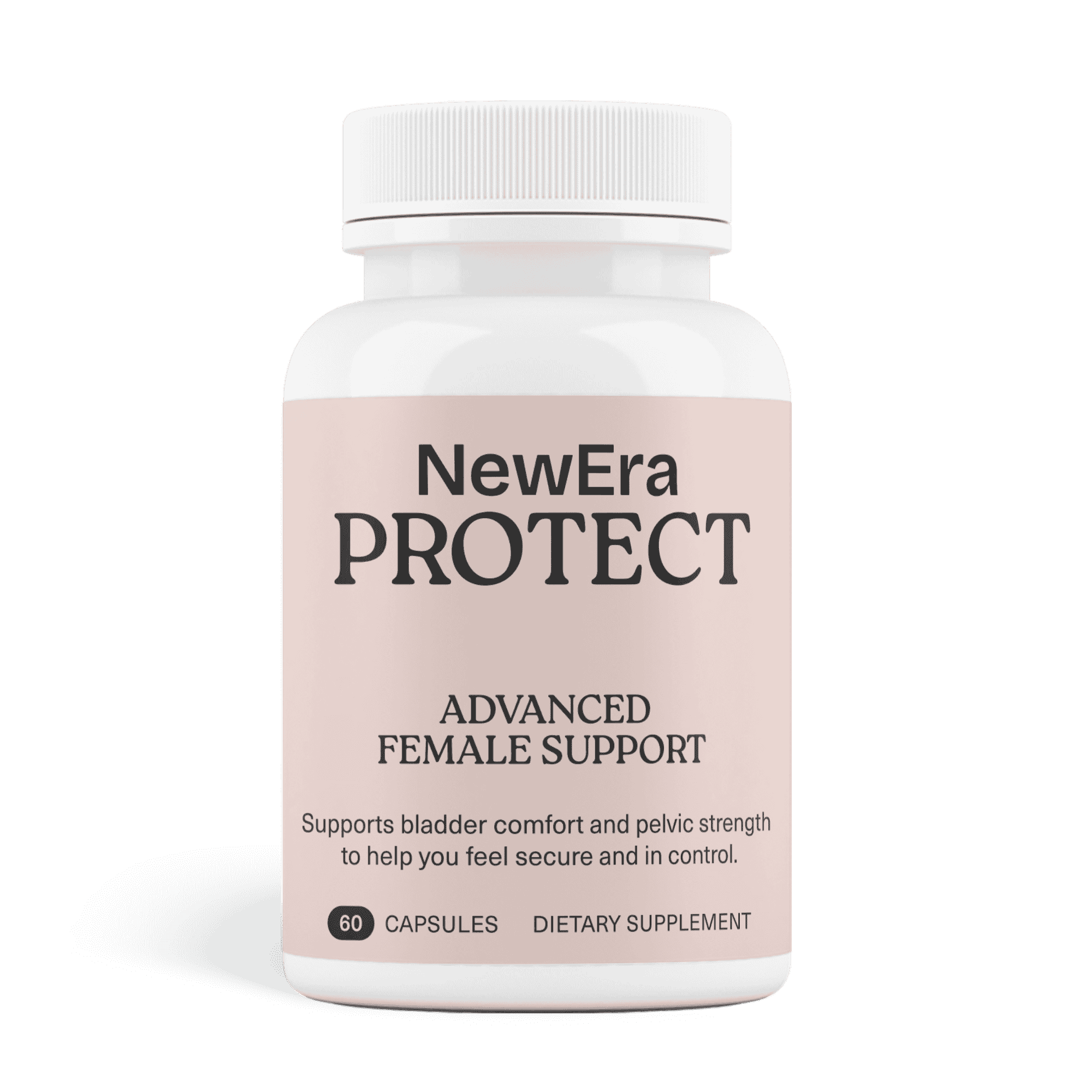
NewEra Protect was formulated for exactly this stage. It combines botanicals with traditional use in pelvic and urinary health:
- Crataeva — traditionally used to support bladder tone and urinary control, particularly relevant when prolapse is accompanied by leakage or urgency
- Horsetail — a concentrated source of silica, used historically to support connective tissue integrity throughout the pelvic region
- Boswellia — well-researched for its role in supporting a healthy inflammatory response in connective tissues
- Japanese Knotweed — contains resveratrol, which supports tissue health and inflammatory balance
For women managing both prolapse symptoms and bladder issues simultaneously — which is extremely common — this kind of daily internal support works alongside pelvic floor training to address the tissue health component that exercise alone doesn't reach.
4. Nervous System and Stress Support
Living with prolapse symptoms creates a particular kind of anxiety — a constant body-awareness that many women describe as exhausting. The fear of symptoms worsening, the hypervigilance around every sensation, the avoidance of activities you used to love.
That anxiety matters physiologically, not just emotionally. Chronic stress increases tension patterns throughout the body, including in the pelvic floor — which can heighten symptom sensitivity even when the underlying prolapse hasn't changed.
Gentle movement, diaphragmatic breathing, and intentional relaxation practices reduce this feedback loop and help the nervous system shift out of the heightened state that amplifies prolapse discomfort.
Does Prolapse Always Get Worse Over Time?
No — and this is one of the most important things to understand.
The fear that prolapse inevitably worsens is a major source of anxiety for women after diagnosis. But research doesn't support this as a universal outcome. The natural history of POP is characterized by slow progression, with many women experiencing little or no change over time.
Women who actively address the underlying pressure patterns, strengthen pelvic coordination, and support tissue health have significantly better outcomes than those who wait and worry.
When Should You See a Healthcare Provider?
Natural support strategies are appropriate and effective for many women — but there are situations where professional evaluation is important. See a provider if you are experiencing:
- A noticeable or persistent bulge at the vaginal opening
- Significant difficulty emptying your bladder or bowel
- Prolapse symptoms that are rapidly progressing
- Pelvic pain that is severe or worsening
A pelvic floor physical therapist is also an invaluable resource. They can assess the specific type and degree of prolapse, identify whether your pelvic floor is too weak, too tight, or poorly coordinated, and create a targeted program based on what your body actually needs.
Frequently Asked Questions
Can pelvic organ prolapse heal on its own? Mild prolapse can remain stable or improve on its own, particularly when contributing pressure factors are addressed. More significant prolapse typically requires active management, but most women see meaningful symptom improvement without surgery when they follow a consistent, targeted approach.
What exercises are safe with pelvic organ prolapse? Low-impact movement like walking, swimming, and yoga (with modifications) is generally well tolerated. High-impact activities like running, jumping, and heavy lifting should be modified while symptoms are active. The key is always how you manage pressure during movement, not necessarily which exercise you're doing.
Can prolapse get worse from exercise? Certain exercises — particularly high-impact or heavy loaded exercises done without proper breathing mechanics — can worsen prolapse symptoms. This doesn't mean exercise should be avoided, but it does mean technique and pressure management matter more than the specific activity.
How long does it take to see improvement? Most women notice changes in symptom severity within 6–12 weeks of consistent, targeted pelvic floor training. Meaningful, sustained improvement typically develops over 3–6 months. Addressing connective tissue health nutritionally alongside movement-based approaches generally accelerates outcomes.
Is pelvic organ prolapse common after menopause? Yes. The decline in estrogen during perimenopause and menopause reduces tissue elasticity and connective tissue support throughout the pelvis — which is why many women notice prolapse symptoms for the first time in their 40s and 50s, even if the underlying pelvic floor changes began years earlier.
You Are Not Broken — Your Body Needs a Different Kind of Support
A prolapse diagnosis can feel frightening and isolating. Many women feel embarrassed, confused, and unsure where to turn. Many are told surgery is the only real option, or that they simply have to manage symptoms forever.
That's not the full picture.
Pelvic organ prolapse is a condition that responds — often remarkably well — to the right combination of pelvic floor coordination training, pressure management, nutritional support, and nervous system care.
Your body has not failed you. It's asking for support it hasn't been given yet.
And when you give it that support, consistently and intelligently, the results often surprise you.
Ready to start? [Learn about NewEra Protect →]
Before letting you go, I do want to mention that this article is meant for educational purposes only and reflects my experience working in the pelvic health space. I am not a medical doctor, and this content is not a substitute for professional medical advice, diagnosis, or treatment. Please consult your healthcare provider before starting any new supplement or wellness routine.
With love,
Alex Miller

Alex Miller is the founder of NewEra Naturals and the creator of Pelvic Floor Strong. She has spent over a decade helping women understand and support their pelvic health naturally. Alex lives in Canada with her daughter, Linen, and is passionate about empowering women through education, movement, and simple daily support.
Read more
If you’ve started noticing bladder leaks in your 40s (or beyond), it can feel confusing… and honestly, a little frustrating. You might be thinking: “Why is this happening now?”“I didn’t have this ...
If you've started leaking when you laugh, sneeze, or stand up — and it feels like it came out of nowhere — you're not imagining it. Bladder leaks affect nearly 2 in 3 women during perimenopause, an...
Leave a comment
All comments are moderated before being published.
This site is protected by hCaptcha and the hCaptcha Privacy Policy and Terms of Service apply.