





Many women expect hot flashes or sleep changes during menopause.
What often comes as a surprise is how much menopause can affect bladder control.
Suddenly you may notice:
• More frequent trips to the bathroom
• A stronger sense of urgency
• Leaks when you cough, laugh, or sneeze
• Waking up at night to urinate
If this sounds familiar, you are not alone. Bladder changes are incredibly common during midlife, yet many women are never told why they happen.
The good news is that once you understand what is happening in the body, there are supportive ways to improve bladder comfort and confidence.
How Common Are Bladder Changes During Menopause?
Bladder symptoms are extremely common during midlife.
Research published in the journal Menopause found that up to 50% of women experience urinary symptoms during the menopausal transition. These symptoms may include urgency, leakage, and increased frequency.
Another large review published in The American Journal of Obstetrics and Gynecology reports that stress urinary incontinence affects roughly 1 in 3 women over 40.
Despite how common these symptoms are, many women assume they simply have to live with them.
That is not necessarily the case.
Why Menopause Affects Bladder Control
Menopause influences bladder function for several reasons, but the most significant factor is declining estrogen.
Estrogen plays an important role in maintaining the health of tissues throughout the pelvic region, including:
• The bladder
• The urethra
• Pelvic floor muscles
• Connective tissue that supports the bladder
As estrogen levels decline, these tissues may become thinner and less elastic.
This can lead to increased bladder sensitivity and reduced pelvic support.
Increased Bladder Sensitivity
Many women notice sudden urgency during menopause.
This happens because hormonal changes can make the bladder more reactive to signals from the nervous system.
Even when the bladder is not completely full, it may send stronger signals that it is time to go.
This is why some women feel they need a bathroom immediately.
Pelvic Floor Changes
The pelvic floor is a group of muscles that supports the bladder, uterus, and bowel.
During menopause, changes in collagen and connective tissue can affect how well these muscles support the bladder.
When pelvic support decreases, leaks may occur during activities that increase abdominal pressure such as:
• Coughing
• Sneezing
• Laughing
• Exercising
• Lifting
This is known as stress urinary incontinence, and it becomes more common with age.
The Role of Stress and the Nervous System
Menopause often arrives during one of the busiest stages of life.
Many women are balancing careers, family responsibilities, aging parents, and their own health changes all at once.
Chronic stress can heighten nervous system activity, which can make bladder urgency feel stronger.
Supporting nervous system balance can sometimes improve bladder symptoms as well.
This is one reason many women find it helpful to address bladder health from multiple angles rather than focusing on just one factor.
Supporting Bladder Health During Menopause
Bladder symptoms during menopause often respond best to a supportive, whole-body approach.
Pelvic Floor Coordination
Pelvic floor exercises can help improve muscle support and coordination.
However, simply squeezing the muscles repeatedly is not always enough. The pelvic floor works best when breathing, posture, and core stability are all working together.
Gentle, functional movement programs that support the entire core system can help restore pelvic balance.
Supporting the Nervous System
When the nervous system is constantly activated by stress, bladder urgency often becomes more noticeable.
Supporting emotional balance and nervous system health may help calm bladder reactivity.
Formulas like NewEra Calm were designed to support stress, mood, and nervous system regulation during midlife.
Supporting Bladder Tissue Health
Bladder comfort is also influenced by connective tissue strength and tissue integrity.
Targeted nutrients can support these structures from within.
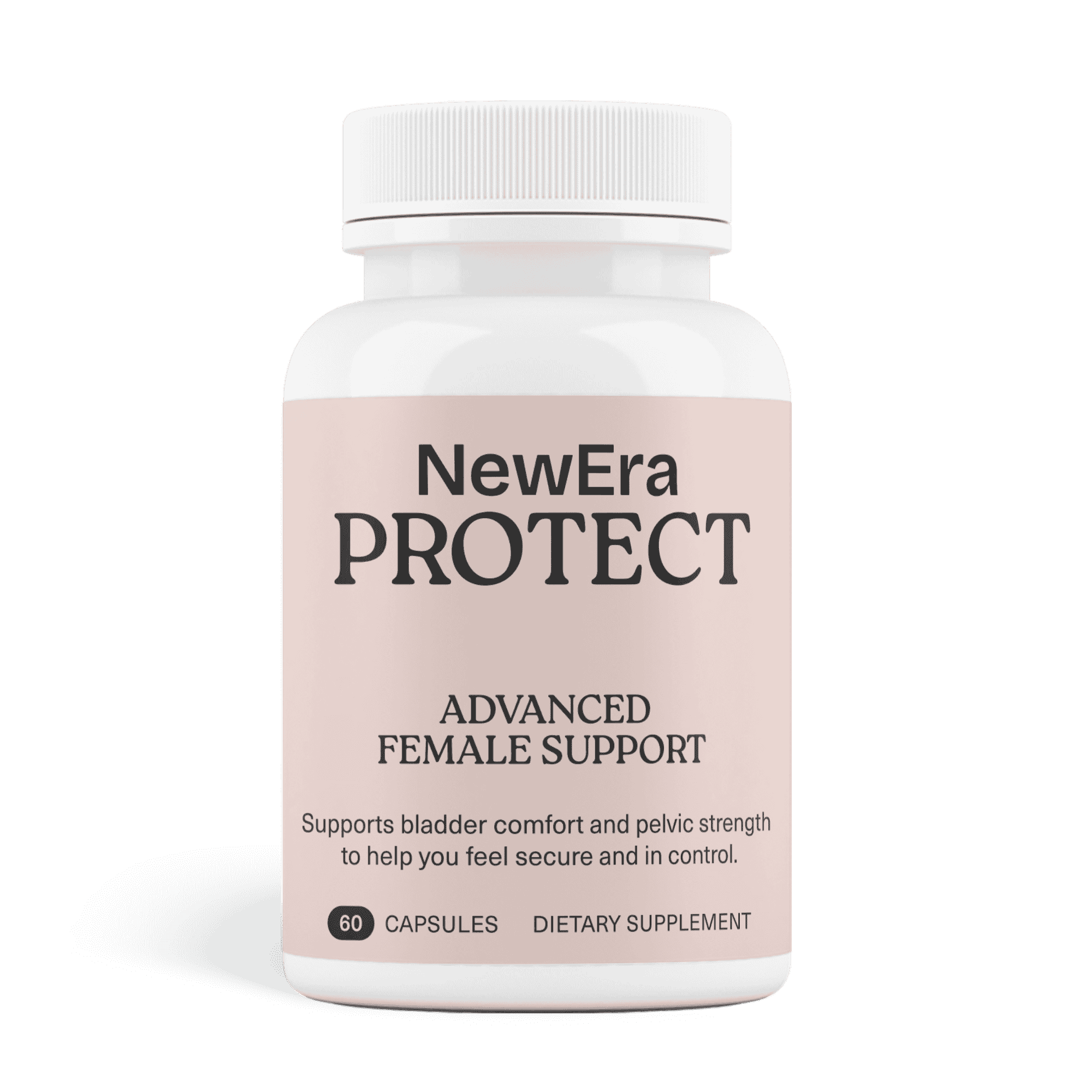
NewEra Protect was formulated specifically to support bladder tissue integrity and pelvic support during midlife and beyond. Ingredients such as Crataeva Nurvala, Japanese Knotweed, and Horsetail help support connective tissue strength and urinary comfort.
For many women, combining movement, nervous system support, and targeted nutrition provides the most meaningful improvements.
Can Bladder Control Improve After Menopause?
Yes.
While hormonal changes can affect bladder function, many women see noticeable improvements when they begin supporting their bodies in the right ways.
Bladder health is influenced by many systems working together. When those systems are supported, the body often adapts.
The key is patience and consistency.
You are not broken.
Your body is simply adjusting to a new phase of life.
The Bottom Line
Menopause can affect bladder control through hormonal shifts, changes in pelvic tissue strength, and increased nervous system sensitivity.
These changes are common, but they do not mean you have to accept bladder leaks as your new normal.
With the right support, many women regain confidence and comfort.
Midlife is not the end of feeling strong in your body.
For many women, it is the beginning of learning how to support it differently.
Frequently Asked Questions
Does menopause cause bladder leaks?
Menopause does not directly cause bladder leaks, but declining estrogen can affect pelvic tissues and bladder sensitivity, which may increase leakage.
Is urinary urgency common during menopause?
Yes. Many women experience increased urgency during perimenopause and menopause due to hormonal changes.
Can bladder control improve naturally during menopause?
Many women improve symptoms through pelvic floor coordination, stress management, and targeted bladder support.
When should I talk to a doctor about bladder symptoms?
If symptoms are severe, painful, or sudden, it is important to consult a healthcare provider to rule out infection or other medical conditions.
Before letting you go, I do want to mention that this article is meant for educational purposes only and reflects my experience working in the pelvic health space. I am not a medical doctor, and this content is not a substitute for professional medical advice, diagnosis, or treatment. Please consult your healthcare provider before starting any new supplement or wellness routine.
With love,
Alex Miller

Alex Miller is the founder of NewEra Naturals and the creator of Pelvic Floor Strong. She has spent over a decade helping women understand and support their pelvic health naturally. Alex lives in Canada with her daughter, Linen, and is passionate about empowering women through education, movement, and simple daily support.
Read more
Pelvic floor exercises vs Kegels: what’s the difference? Learn why Kegels alone may not fix bladder leaks and how a full-body pelvic floor approach can help women over 40 regain control naturally.
Bladder leakage after childbirth is common but not something you have to live with. Learn why it happens and natural ways to improve symptoms.
Leave a comment
All comments are moderated before being published.
This site is protected by hCaptcha and the hCaptcha Privacy Policy and Terms of Service apply.