




Postpartum Bladder Leakage: Why It Happens and What Actually Helps
You sneeze, laugh, pick up your baby — and leak. If that sounds familiar, you're far from alone. Bladder leakage after childbirth is one of the most common postpartum symptoms women experience, yet it's also one of the least talked about.
Here's what's actually happening in your body, why it doesn't always resolve on its own, and what you can do about it — no matter how long ago you gave birth.
What Causes Bladder Leakage After Childbirth?
During pregnancy and delivery, your pelvic floor takes on an enormous amount of stress. Your pelvic floor is a group of muscles that runs across the base of your pelvis, supporting your bladder, uterus, and bowel — and controlling when you use the bathroom.
As your baby grows, the expanding uterus places sustained pressure directly on these muscles. During a vaginal birth, the pelvic floor stretches significantly to allow delivery, and in some cases the connective tissue and nerves that control bladder function can sustain damage. Even women who deliver by C-section often experience bladder issues, simply because of the hormonal and physical changes during pregnancy itself.
After childbirth, the pelvic floor muscles may be:
- Weakened — unable to generate the force needed to hold under pressure
- Overstretched — lacking the recoil to respond quickly
- Out of sync — disconnected from your core, diaphragm, and breathing patterns
The result? Leaks when pressure spikes — coughing, sneezing, laughing, running, lifting your baby. This is clinically called stress urinary incontinence (SUI), and it's the most common type of postpartum bladder leakage.
How Common Is Postpartum Bladder Leakage?
Very. Research consistently shows that up to 1 in 3 women experience urinary leakage in the postpartum period. Some studies put the figure even higher — as many as 4 in 10 women during or immediately after pregnancy.
Women who delivered vaginally face a roughly 50% higher chance of developing postpartum incontinence compared to those who had cesarean births.
Despite how widespread it is, many women feel ashamed, assume it's untreatable, or simply wait it out. Postpartum bladder leakage is often normalized by both women and healthcare providers as "just part of having kids." That normalization leads to delayed treatment and longer-term problems.
Will Postpartum Bladder Leakage Go Away on Its Own?
Sometimes — but not reliably.
Most mild cases of postpartum stress incontinence do improve in the first weeks and months after birth, as pregnancy weight reduces and the body begins to heal. However, 10–20% of women still experience urinary incontinence 5 years after childbirth, particularly when the underlying pelvic floor dysfunction was never properly addressed.
The longer it's ignored, the harder it can be to reverse.
Why "Just Do Kegels" Is Incomplete Advice
If you've been told that Kegel exercises are the answer, that's only part of the picture.
Kegels (pelvic floor contractions) can be helpful — but only when they're done correctly, and only when they address the real issue. Here's what most people aren't told:
Tight doesn't equal strong. Some women actually have pelvic floors that are too tight, which can make leaking worse, not better. More squeezing on top of tension doesn't help.
The pelvic floor doesn't work alone. It's part of a system that includes your core muscles, your diaphragm, your posture, and your nervous system. If those pieces aren't working together, isolated Kegels won't close the gap.
What your body actually needs is coordination — relearning how all these components move in sync during everyday activities like lifting, sneezing, and exercise.
What Actually Helps Postpartum Bladder Leakage?
The most effective approach combines multiple types of support:
1. Pelvic Floor Coordination Training
Rather than simply squeezing and releasing, targeted programs teach your body to properly engage and relax the pelvic floor in coordination with your breath, core, and movement. Programs like Pelvic Floor Strong are specifically designed for postpartum women and focus on functional strength — the kind that holds in real life, not just during exercises.
2. Nutritional Support for Bladder Tissue
Bladder health isn't only about muscle strength. The connective tissues surrounding your bladder also need support — especially after the physical strain of pregnancy and birth.
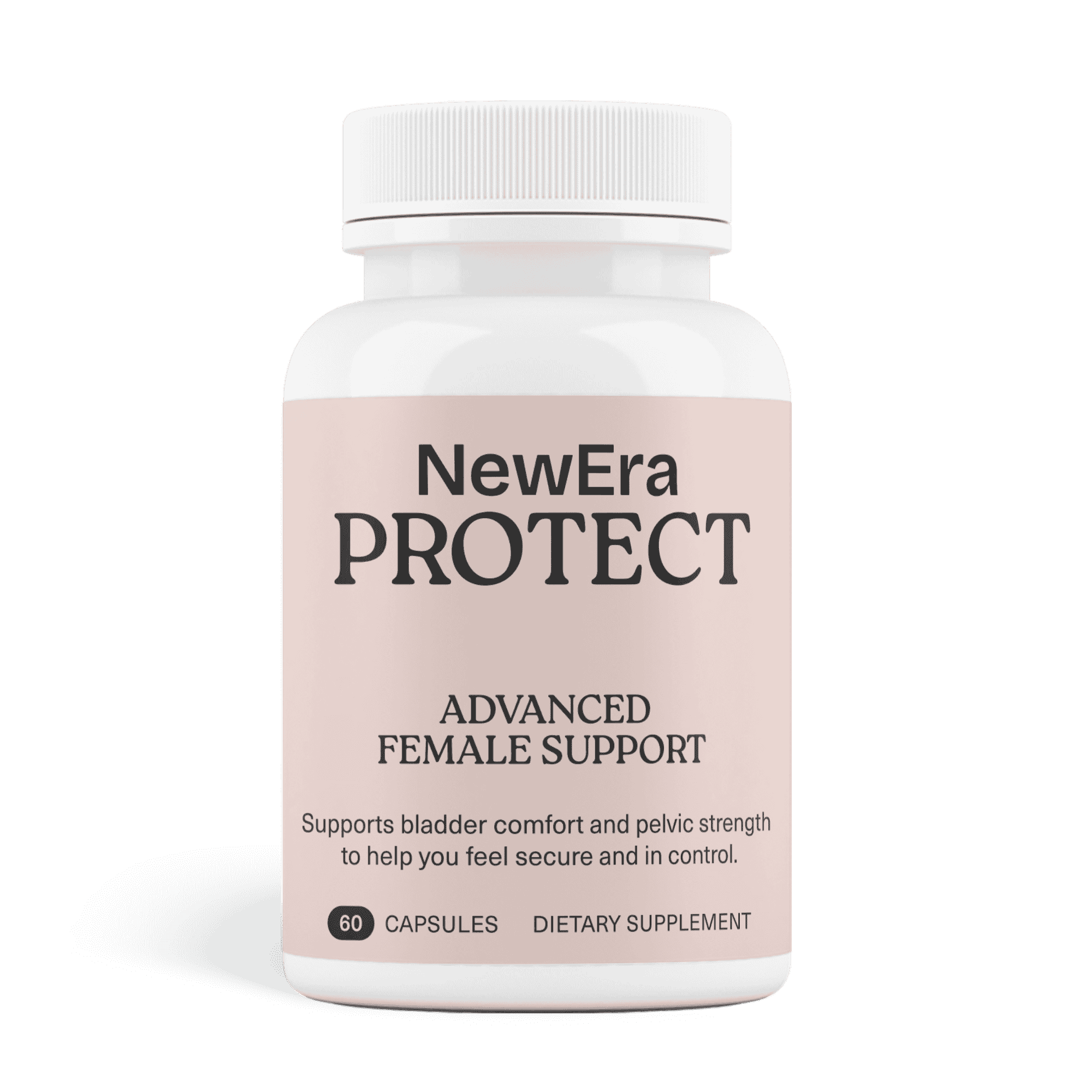
NewEra Protect was formulated for this exact stage of life. It combines traditionally used botanical ingredients including:
- Crataeva — used in herbal traditions to support bladder tone and urinary control
- Horsetail — a source of silica, traditionally used for connective tissue support
- Japanese Knotweed — contains resveratrol, which supports inflammation balance and tissue health
Taken daily, it provides gentle, ongoing nutritional support as your body rebuilds.
3. Nervous System & Stress Regulation
This piece is rarely discussed — but it matters.
Your bladder is highly sensitive to your nervous system. When your body is in a state of chronic stress, tension, or overactivation, the bladder becomes more reactive and can worsen urgency and frequency symptoms.
Practical tools that help include:
- Diaphragmatic breathing exercises
- Reducing persistent tension patterns in the hips, abdomen, and jaw
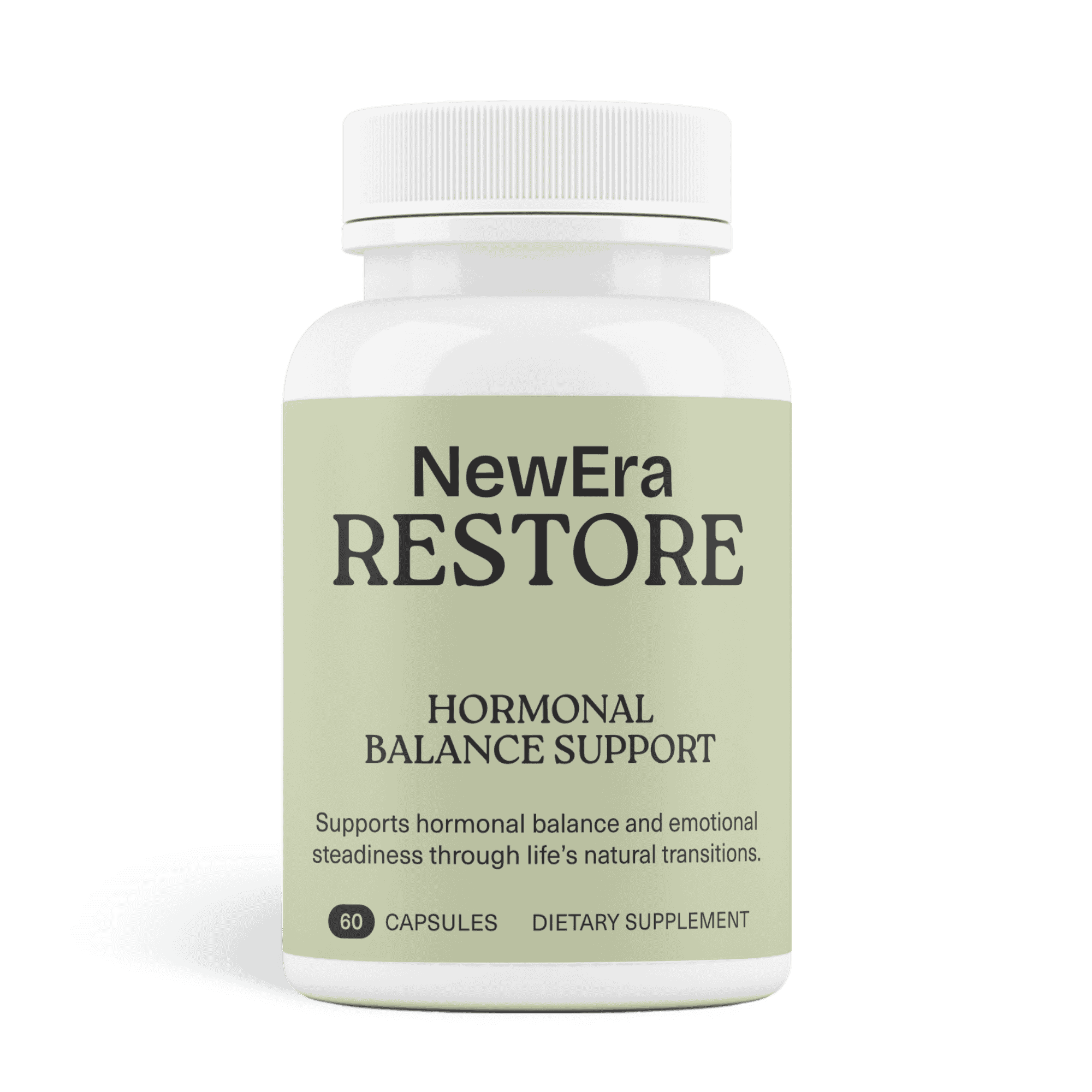
- Supporting hormone balance (estrogen plays a role in bladder tissue health, particularly postpartum and during breastfeeding)
When Should You Take Postpartum Bladder Leakage Seriously?
Pay attention if you are:
- Still experiencing leaks 3–6 months or more after birth
- Noticing increased urgency or running to the bathroom more frequently
- Avoiding exercise, activities, or social situations because of leaks
- Leaking in situations that are getting worse, not better
These are signs that your body needs targeted support — not something to push through and ignore.
Frequently Asked Questions About Postpartum Bladder Leakage
How long does bladder leakage last after giving birth? For many women, mild leakage improves within the first few weeks to months. However, without the right support, symptoms can persist for years. If you're still leaking at your 6-week postpartum check, raise it with your provider.
Can I fix bladder leakage years after having a baby? Yes. The pelvic floor responds to training at any point. Women see meaningful improvement even years after giving birth when they work on coordination, not just strength.
Does breastfeeding affect bladder leakage? It can. Breastfeeding lowers estrogen levels, and estrogen helps maintain the elasticity and strength of bladder and urethral tissue. Supporting your body nutritionally during this period is especially important.
Is bladder leakage after childbirth the same as urinary incontinence? Yes — it falls under the umbrella of postpartum urinary incontinence, most commonly stress urinary incontinence (SUI). It's a medical condition, not just an inconvenience, and it's treatable.
The Bottom Line
Postpartum bladder leakage is common. But common doesn't mean you have to accept it.
Whether you gave birth six weeks ago or six years ago, your body has the capacity to rebuild — with the right combination of pelvic floor training, nutritional support, and nervous system care.
Small, consistent steps make a real difference. You deserve to feel confident in your body again.
Interested in targeted support for pelvic floor recovery? [Explore Pelvic Floor Strong →] and [Learn about NewEra Protect →]
Before letting you go, I do want to mention that this article is meant for educational purposes only and reflects my experience working in the pelvic health space. I am not a medical doctor, and this content is not a substitute for professional medical advice, diagnosis, or treatment. Please consult your healthcare provider before starting any new supplement or wellness routine.
With love,
Alex Miller

Alex Miller is the founder of NewEra Naturals and the creator of Pelvic Floor Strong. She has spent over a decade helping women understand and support their pelvic health naturally. Alex lives in Canada with her daughter, Linen, and is passionate about empowering women through education, movement, and simple daily support.
Read more
Learn how menopause affects bladder control, including urgency and leaks. Discover why hormone changes impact the bladder and how to support midlife bladder health.
Bladder leaks getting worse in your 40s or 50s? It's not just aging — estrogen, pelvic floor changes & your nervous system all play a role. Here's what actually helps.
Leave a comment
All comments are moderated before being published.
This site is protected by hCaptcha and the hCaptcha Privacy Policy and Terms of Service apply.