



You used to be able to laugh, sneeze, or make it to the bathroom without a second thought. Now you're not so sure.
If bladder leaks have become more frequent — or harder to control — as you've moved through your 40s and 50s, you're not imagining it. And you're far from alone.
More than 50% of women in perimenopause and menopause experience some form of urinary incontinence. Yet most are never told why it's happening, or what they can actually do about it beyond buying pads and hoping for the best.
This post breaks down exactly what's changing in your body, why bladder leaks tend to escalate with age, and what a real approach to improvement looks like.
Is It Normal for Bladder Leaks to Get Worse With Age?
Common — yes. Normal — no.
Urinary leakage does increase significantly during the menopause transition and postmenopausal years. But "common" doesn't mean you have to accept it as your new normal. There are clear, identifiable reasons why this happens, and most of them are addressable with the right support.
Here's what's actually going on.
4 Reasons Bladder Leaks Worsen With Age
1. Estrogen Decline — The Biggest Driver
This is the piece most women aren't told about.
Estrogen isn't just a reproductive hormone. It plays a direct role in maintaining the health of your entire urinary tract — including the bladder wall, the urethral lining, and the pelvic floor tissues that hold everything in place.
As estrogen levels decline during perimenopause and menopause, several things happen simultaneously: the lining of the urethra becomes thinner and less elastic, bladder tissue loses some of its structural integrity, and the urethral closure mechanism weakens — making leaks more likely when there's any pressure on the bladder.
Estrogen decline also affects the nervous system receptors in the bladder itself, which is why many women notice not just more leaking, but more urgency — that sudden, intense "I have to go now" feeling that's hard to override.
2. Pelvic Floor Changes Over Time
Your pelvic floor has been quietly doing its job for decades. But over time — especially if you've had pregnancies, done high-impact exercise for years, or spent long periods sitting — the muscles can become weaker, less responsive, or even chronically tight and uncoordinated.
Here's the important nuance: tight doesn't mean strong. Many women in midlife actually have pelvic floors that are overly tense, which paradoxically makes leaking worse. Simply doing more Kegel exercises in this situation can backfire.
What the pelvic floor needs as it ages isn't just more contraction — it's better coordination with your core, breath, and posture. That's what actually controls leakage in real-life movements.
3. Loss of Collagen and Connective Tissue Support
As we age, the body naturally produces less collagen. That matters for bladder health because the tissues that structurally support your bladder depend on collagen to maintain their integrity and elasticity.
When that support decreases, the bladder can descend slightly, increasing pressure and making it harder to hold urine — particularly during movement, exercise, or anything that adds abdominal pressure.
This is also why bladder leaks in midlife often feel different from postpartum leaks — it's not just muscle weakness, it's a broader tissue support issue.
4. Nervous System Sensitivity
Your bladder has a direct line to your nervous system — and it's highly responsive to stress, tension, and hormonal fluctuation.
As women move through perimenopause, cortisol patterns shift, sleep becomes disrupted, and the body is often in a lower-grade state of stress. All of this can make the bladder more reactive and harder to predict. Urgency, frequency, nighttime trips to the bathroom — these are often nervous system signals as much as they are bladder problems.
Why Symptoms Can Escalate Gradually
Bladder leaks rarely go from zero to severe overnight. They tend to build slowly, which is exactly why so many women don't seek help until symptoms are significantly affecting their daily life.
It starts with a small leak when you sneeze. Then a little urgency at the gym. Then you start planning outings around bathroom locations. Then you stop doing the workout class you loved.
That gradual escalation isn't inevitable — but it does tend to happen when the early signals are brushed off as "just aging." They're not. They're your body asking for a different kind of support than it needed before.
What Actually Helps Bladder Leaks in Your 40s, 50s, and Beyond
The most effective approach is not a single fix — it's a combination of targeted support across the systems involved.
1. Pelvic Floor Coordination Training
Rather than just squeezing more, the goal is teaching your pelvic floor to work properly as part of a system — coordinated with your breath, your core, and your everyday movement patterns.
Pelvic Floor Strong is a program specifically designed to restore this kind of functional coordination, not just isolated muscle strength. It's particularly effective for women whose symptoms have evolved over years, because it addresses the root pattern rather than just the symptom.
2. Nutritional Support for Bladder and Connective Tissue Health
Because bladder leaks in midlife often involve tissue integrity and inflammation — not just muscle weakness — targeted nutritional support can make a meaningful difference alongside movement-based approaches.
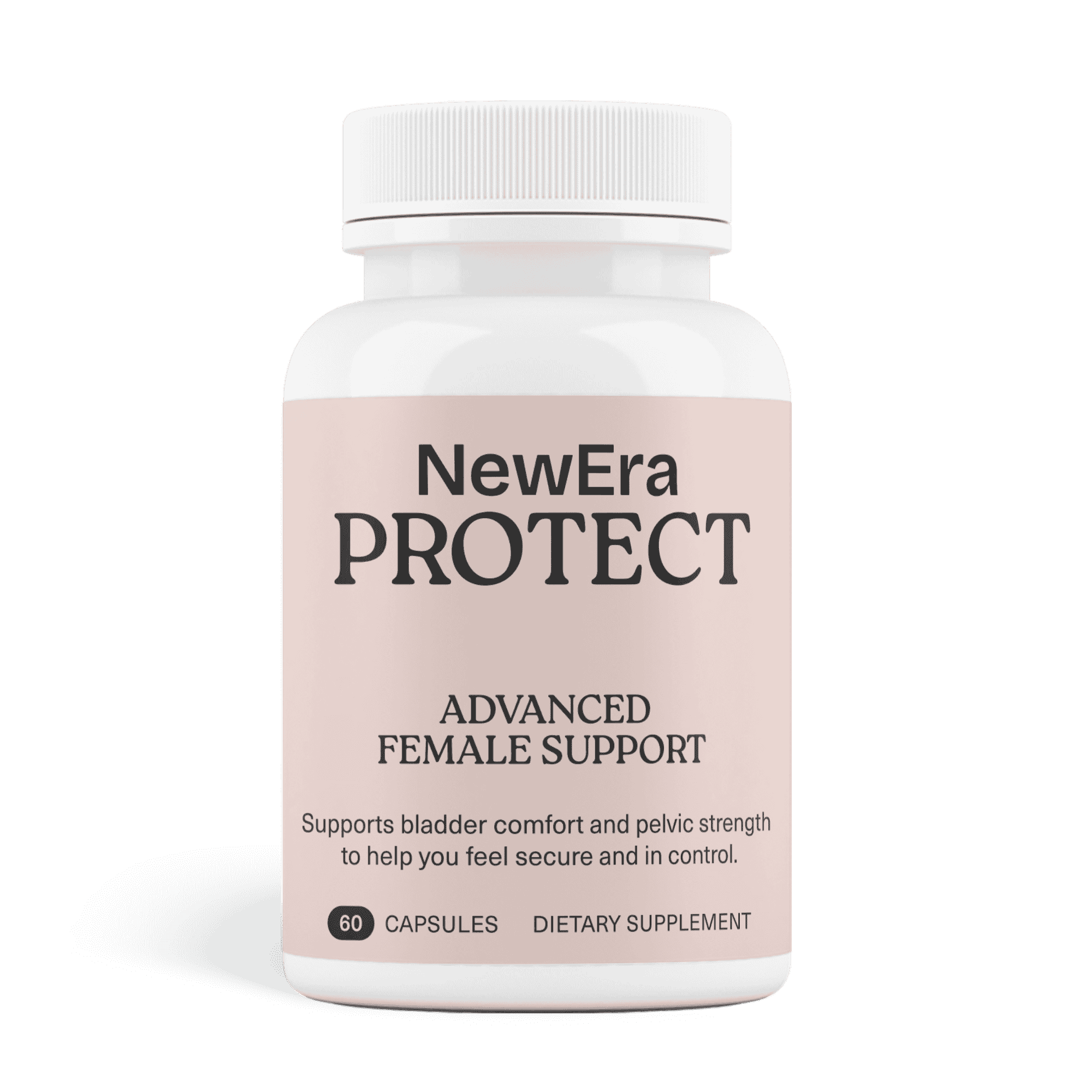
NewEra Protect was formulated specifically for this life stage, combining botanical ingredients with traditional use in urinary health:
- Crataeva — traditionally used to support bladder tone and urinary control
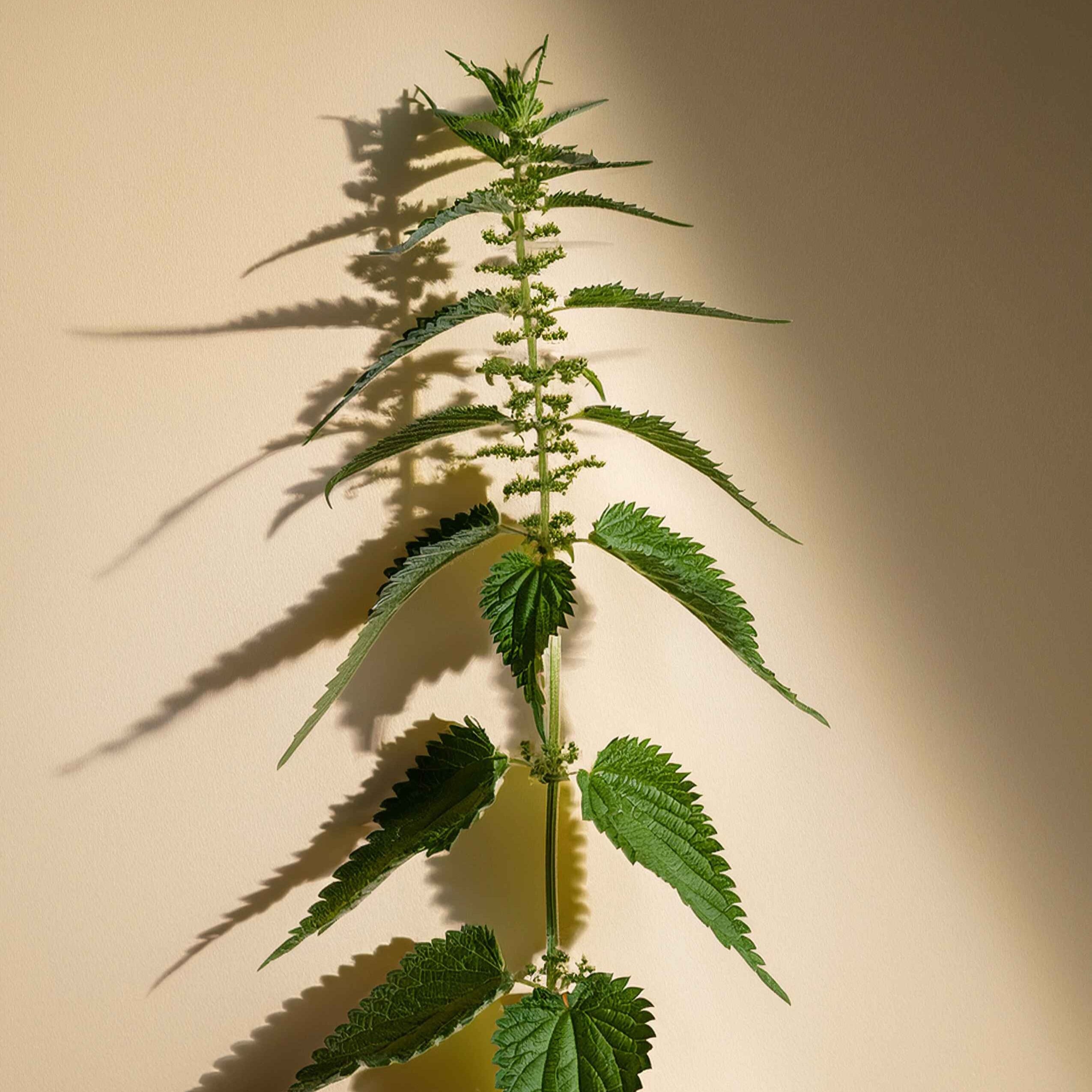
- Horsetail — a rich source of silica, used historically to support connective tissue integrity
- Boswellia — well-studied for its role in supporting healthy inflammatory response in connective tissues
Taken consistently as a daily supplement, it provides a foundation of support as your body navigates the hormonal and tissue changes of midlife.
3. Nervous System Regulation
Addressing the nervous system component of bladder reactivity is one of the most overlooked — and most effective — parts of any midlife bladder support plan.
Simple daily practices that help include diaphragmatic breathing (which directly calms the bladder's nerve signaling), consistent sleep, reducing stimulants like caffeine and alcohol that irritate the bladder lining, and gentle movement that releases chronic tension in the hips and pelvic region.
These aren't soft suggestions. They're evidence-aligned approaches that directly reduce urgency and frequency for many women.
Frequently Asked Questions
Why are my bladder leaks suddenly getting worse in my 40s? Your 40s often mark the beginning of perimenopause, when estrogen starts to fluctuate and decline. Since estrogen directly supports bladder and urethral tissue health, this hormonal shift is one of the most common triggers for worsening bladder leaks — even in women who never had issues before.
Can bladder leaks from menopause be reversed? Many women see significant improvement with the right combination of pelvic floor training, nutritional support, and lifestyle adjustments. Full reversal depends on the type and severity of incontinence, but meaningful improvement is possible at any age.
Does bladder leakage mean I need surgery? Not at all — surgery is a last resort and is rarely necessary when other approaches are tried first. Pelvic floor therapy, behavioral changes, and supportive nutrition resolve or greatly reduce symptoms for the majority of women with stress or urge incontinence.
Why do I need to pee so urgently all of a sudden? Sudden, intense urge to urinate — sometimes called overactive bladder — becomes more common during menopause because estrogen loss affects the nerve receptors in the bladder wall, making it more reactive. This is different from stress incontinence (leaking with pressure) and responds best to a combination of bladder training and nervous system support.
Is leaking urine at night (nocturia) related to menopause? Yes. Waking up one or more times per night to urinate is common during perimenopause and menopause, driven by hormonal shifts, changes in sleep architecture, and increased bladder sensitivity. It's treatable and shouldn't be accepted as permanent.
The Bottom Line
Bladder leaks getting worse with age isn't a character flaw or an inevitable consequence of getting older.
It's a physiological response to real changes — in your hormones, your tissues, your pelvic floor coordination, and your nervous system — all of which can be meaningfully supported.
The women who improve most are those who stop waiting, stop assuming it will fix itself, and start giving their bodies what they actually need for this stage of life.
You don't have to plan your life around the nearest bathroom.
Ready to take the next step? [Explore Pelvic Floor Strong →] and [Learn about NewEra Protect →]
Before letting you go, I do want to mention that this article is meant for educational purposes only and reflects my experience working in the pelvic health space. I am not a medical doctor, and this content is not a substitute for professional medical advice, diagnosis, or treatment. Please consult your healthcare provider before starting any new supplement or wellness routine.
With love,
Alex Miller

Alex Miller is the founder of NewEra Naturals and the creator of Pelvic Floor Strong. She has spent over a decade helping women understand and support their pelvic health naturally. Alex lives in Canada with her daughter, Linen, and is passionate about empowering women through education, movement, and simple daily support.
Read more
Bladder leakage after childbirth is common but not something you have to live with. Learn why it happens and natural ways to improve symptoms.
Most women assume bladder leakage means surgery or pads forever. The truth? Many cases improve significantly without either. Here's what the evidence actually says.
Leave a comment
All comments are moderated before being published.
This site is protected by hCaptcha and the hCaptcha Privacy Policy and Terms of Service apply.