


Let's talk about something that doesn't get nearly enough attention.
Have you ever noticed that since menopause, you're making more trips to the bathroom?
Maybe you suddenly feel the urge to go—even when you just went.
Maybe you cross your legs before you sneeze.
Or perhaps you've started planning errands around where the nearest restroom is.
If you're nodding your head, I want you to hear this first:
You're not imagining it.
And you're definitely not alone.
Bladder changes are incredibly common during perimenopause and menopause, yet so many women are left wondering, "Is this just part of getting older?"
The truth is, hormonal changes can absolutely affect bladder health—but there are also many natural ways to support your body during this stage of life.
Let's talk about why these changes happen and, more importantly, what you can do about them.
Why Does Menopause Affect Bladder Health?
As estrogen levels decline during menopause, several changes can occur throughout the urinary tract and pelvic floor.
Estrogen helps support the tissues surrounding the bladder and urethra. When estrogen decreases, these tissues may become thinner and less elastic, which can contribute to symptoms like urgency, frequency, and bladder leaks.
According to the North American Menopause Society, lower estrogen levels during menopause can affect the urinary tract and increase the likelihood of urinary symptoms in some women.
That doesn't mean every woman will experience bladder issues—but many do.
Common Bladder Symptoms During Menopause
Every woman's experience is different, but some of the most common symptoms include:
- Frequent urination
- Sudden urinary urgency
- Bladder leaks when coughing, laughing, or exercising
- Waking up at night to urinate
- A feeling of not completely emptying the bladder
- Increased sensitivity to certain foods or drinks
If you've noticed one or more of these symptoms, you're certainly not alone.
You're in Good Company
Bladder concerns are much more common than most women realize.
Research suggests that urinary incontinence affects millions of women, and the likelihood increases with age and after menopause.
Despite this, many women never mention their symptoms because they feel embarrassed or assume it's simply something they have to live with.
Here's the good news:
There are steps you can take to support your bladder naturally.
1. Keep Your Pelvic Floor Strong
Your pelvic floor muscles provide support for your bladder and other pelvic organs.
Like any muscles in the body, they benefit from regular attention.
Gentle strengthening exercises, appropriate pelvic floor training, and staying physically active can all support healthy pelvic floor function.
Remember, stronger isn't always better.
Healthy coordination matters just as much as strength.
2. Stay Hydrated
This surprises many women.
Some intentionally drink less water because they're worried about making more bathroom trips.
But concentrated urine can actually irritate the bladder.
Aim for consistent hydration throughout the day rather than drinking large amounts all at once.
3. Watch for Bladder Irritants
Certain foods and beverages may trigger bladder symptoms in some women.
Common bladder irritants include:
- Coffee
- Tea
- Carbonated drinks
- Alcohol
- Artificial sweeteners
- Spicy foods
- Citrus fruits
- Tomato products
You don't have to eliminate everything.
Instead, pay attention to how your body responds.
Keeping a simple food and symptom journal can help identify your personal triggers.
4. Keep Moving
Movement supports nearly every system in the body—including your pelvic floor.
Walking, strength training, stretching, yoga, and mobility exercises all contribute to healthy aging.
Even 20 to 30 minutes of movement most days can make a difference.
5. Prioritize Healthy Bathroom Habits
Small habits can have a surprisingly big impact.
Try to:
- Avoid "just in case" bathroom trips
- Take your time when emptying your bladder
- Avoid straining
- Listen to your body's natural signals
These simple habits can help support normal bladder function.
6. Support Your Overall Wellness
Your bladder doesn't work in isolation.
Sleep, stress, nutrition, hormone changes, and daily movement all influence how you feel.
Supporting your whole body often supports your bladder, too.
Supporting Your Body Naturally During Menopause
One thing I've learned from talking with so many women is that there isn't one magic answer.
Real wellness usually comes from several small habits working together.
That's the philosophy behind NewEra Naturals.
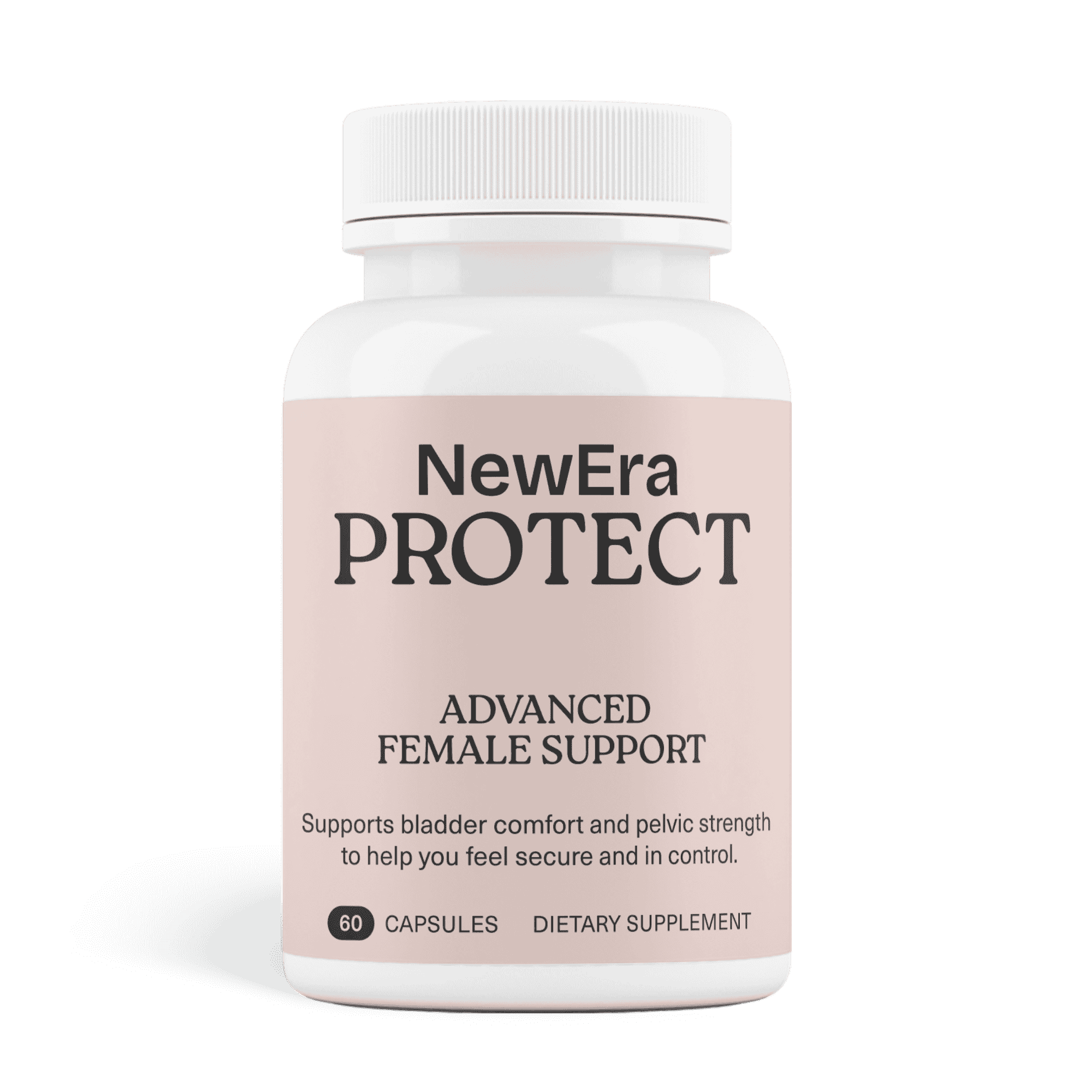
For women looking to support healthy bladder and urinary tract function, NewEra Protect was formulated to complement healthy lifestyle habits with targeted nutritional support.*
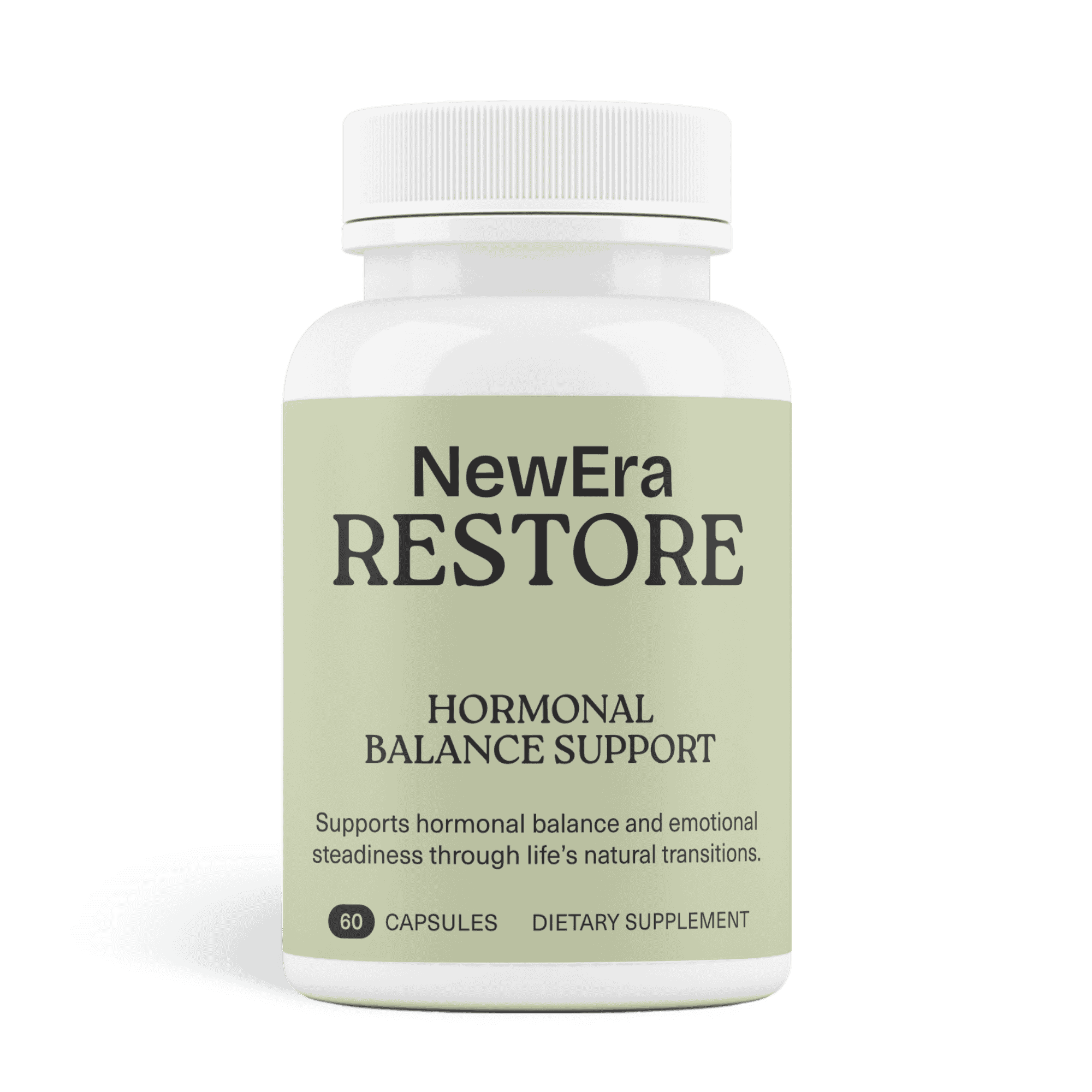
And because menopause affects more than just the bladder, many women also choose to support their overall wellbeing with NewEra Restore.
Restore includes nutrients like Vitamins B6 and B12, Pantothenic Acid, Zinc, L-Tyrosine, Dong Quai, Ashwagandha, Ginkgo, and Maca—ingredients selected to support hormonal health, energy, mood, cognitive function, and a healthy stress response as part of an overall wellness routine.*
No supplement replaces healthy habits.
But many women appreciate having daily nutritional support while navigating the changes that come with menopause.
My Biggest Wish for Women Going Through Menopause
I wish every woman knew this:
You don't have to suffer in silence.
Bladder changes during menopause are common.
They're not something to feel embarrassed about.
The more we talk about them, the more empowered women become to seek support, make healthy lifestyle changes, and understand what's happening in their bodies.
That's something worth celebrating.
The Bottom Line
Menopause brings many changes, and your bladder is no exception.
By supporting your pelvic floor, staying hydrated, identifying potential bladder irritants, moving your body regularly, and focusing on your overall wellness, you can take meaningful steps toward supporting bladder health naturally.
Aging doesn't mean giving up confidence.
It means learning new ways to care for the incredible body that has carried you through every stage of life.
*These statements have not been evaluated by the Food and Drug Administration. This product is not intended to diagnose, treat, cure, or prevent any disease.
Before letting you go, I do want to mention that this article is meant for educational purposes only and reflects my experience working in the pelvic health space. I am not a medical doctor, and this content is not a substitute for professional medical advice, diagnosis, or treatment. Please consult your healthcare provider before starting any new supplement or wellness routine.
With love,
Alex Miller

Alex Miller is the founder of NewEra Naturals and the creator of Pelvic Floor Strong. She has spent over a decade helping women understand and support their pelvic health naturally. Alex lives in Canada with her daughter, Linen, and is passionate about empowering women through education, movement, and simple daily support.
Read more
Wondering if you have pelvic floor dysfunction? Learn the most common symptoms, including bladder leaks, pelvic pressure, urgency, and core weakness, plus ways to support pelvic health.
Let's talk about one of the most important muscle groups in a woman's body—and one that many of us don't think about until something starts to feel different. Maybe you've noticed a little bladder ...
Leave a comment
All comments are moderated before being published.
This site is protected by hCaptcha and the hCaptcha Privacy Policy and Terms of Service apply.